


International Layout

+
Seagull Cooling Technologies (Asia Pacific) Sdn. Bhd.


You can see the main difference between open loop cooling towers and closed loop cooling towers by how they move process fluid. Open loop cooling towers let water touch the air. Closed loop cooling towers keep process fluid inside a closed path for cleaner cooling. Picking the right cooling tower saves energy, keeps your equipment safe, and cuts down on costs. Seagull has both types and gives you new cooling solutions that are high quality and smart.
Feature | Open Loop Cooling Towers | Closed Loop Cooling Towers |
|---|---|---|
Water Loss | More water is lost from evaporation | Less water is lost |
Process Fluid Quality | Process fluid can get dirty easier | Process fluid stays clean |
Approach Temperature | Can reach lower approach temperature | Heat transfer works better |
Open loop cooling towers let water touch air. This can cause contamination. But it helps cool water to lower temperatures.
Closed loop cooling towers keep the process fluid sealed. This keeps it clean and stops water loss. They are good for sensitive uses.
Picking the right cooling tower can save energy. It can protect equipment. It can also lower costs over time. Think about what you need.
Regular maintenance is very important. Open loop systems need more checks to stop scaling. Closed loop systems need less work.
Seagull gives custom solutions and expert advice. They help you pick the best cooling tower for your project.
Open loop cooling towers use a simple way to cool water. Warm water from your system goes up to the top of the tower. The water spreads out over special fill material. Air moves through the tower. In crossflow designs, air goes across the water. In counterflow designs, air moves against the water. Some water turns into vapor as air passes by. This takes away heat and cools the rest of the water. The cooled water goes back to your equipment. It is ready to take in more heat.
Key Operational Principle | Description |
|---|---|
Warm Water Distribution | Warm water is pumped to the top and spread over the wet-deck fill. |
Evaporation Process | Air moves through the wet-deck, making some water evaporate and remove heat. |
Air Flow Direction | In cross flow towers, air goes across the water. In counter flow towers, air goes the other way. |
Heat Transfer Mechanism | Warm water and cool air mix, which lets heat leave and cools the water. |
Recirculation | The cooled water is sent back to the heat source again and again. |
Seagull’s open cooling towers use strong materials like FRP and hot-dip galvanized steel. You can get features like plume abatement, high-level water collection, and very quiet operation.
Open loop cooling towers have many good points. They cool water well and can reach lower approach temperatures. The design is simple, so it is easy to install and use. Seagull’s towers are made with tough materials, so they last a long time. Plume abatement helps save water and is better for the environment. Very quiet towers are good for places near homes or offices.
There are some things to think about with open cooling towers. The water touches air, so dust and dirt can get in. You may need to treat the water to stop scaling or rust. More water is lost from evaporation than in closed systems. You should think about these things when you look at the good and bad sides of each type.
Open loop cooling towers are used in many places. Power plants use them to cool condenser water. Factories use them to get rid of heat. Big buildings, hospitals, and schools use them for HVAC systems.
Industry | Application Description |
|---|---|
Power Plants | Cooling towers cool water used in condensers at power plants. |
Industrial | Used in chemical plants, oil refineries, steel mills, and factories to keep equipment and processes at the right temperature. |
HVAC | Used in big buildings, hospitals, schools, and hotels for air conditioning to keep rooms comfortable. |
Seagull gives custom solutions for each industry. They make sure you get the right tower and features for your needs.
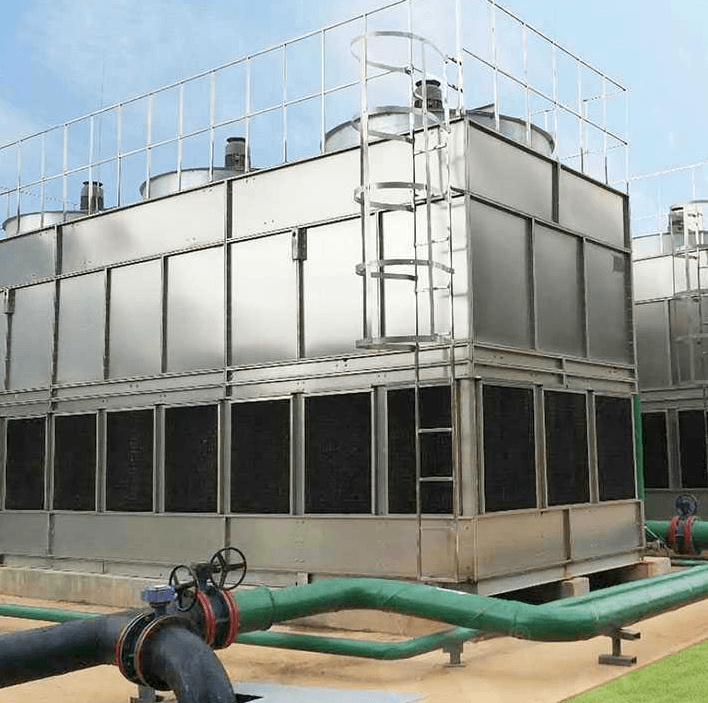
Closed loop cooling towers have two fluid circuits. The process fluid moves inside a closed coil. Spray water flows outside the coil. Heat leaves the process fluid and goes to the spray water. Then, heat moves from the spray water to the air. This happens through evaporative cooling. The process fluid never touches the outside air. This keeps it clean and stops dirt from getting in.
Principle of Operation | Description |
|---|---|
Fluid Circuits | There are two fluid circuits. Spray water is outside, and process fluid is inside. |
Heat Transfer | Heat moves from the process fluid to spray water, then to the air by evaporation. |
Contamination Control | The process fluid stays away from outside air. This keeps it clean and safe. |
Seagull’s closed loop cooling towers have special features. Plume abatement helps cut down on visible vapor. The towers are built strong so they last a long time.
Closed loop cooling towers have many good points. Here are some main advantages:
The process fluid does not touch outside air, so it stays clean.
You use less water because the process fluid goes in a closed loop.
There is less scaling and fouling, so you do not need to clean as much.
You spend less time and money fixing equipment.
You save money on water treatment since you use less basin water.
You can get rid of heat with pumps off, which saves energy when possible.
Seagull’s design helps you save energy and makes equipment last longer. Evaporative cooling works well, especially when it is hot outside.
There are some things to think about with closed loop cooling towers. The main problems are higher starting costs and a little less thermal efficiency than open systems. The evaporative part needs water treatment and checking often. If you want to make your system bigger, you may need to change a lot because of the design.
Disadvantage | Explanation |
|---|---|
Higher Initial Capital Cost | The design is complex and uses heat exchangers, so it costs more at first. |
Slightly Lower Thermal Efficiency | Indirect heat transfer means you may need bigger towers, which use more energy. |
Evaporative Section Needs Management | You must treat and check the water often. There are still risks like Legionella. |
Expansion Complexity | The design makes it hard to add more capacity. You may need big changes to expand. |
You should look at both the good and bad sides before you choose.
Closed loop cooling towers are good when you need clean process fluid and want to protect your equipment. You see them in power plants, chemical factories, and data centers. They are also used where water quality is very important, like food processing and electronics. Seagull’s closed loop cooling towers use evaporative cooling to keep your system working well. You also get features like plume abatement and strong materials for long life. Taking care of your closed loop system helps your equipment work better and last longer.
Tip: If you want clean process fluid and less maintenance, closed loop cooling towers are a smart pick.
Open circuit cooling tower and closed loop cooling towers work in different ways. Open circuit cooling tower sends water into the tower. The water spreads out over fill media. Air moves through the tower. Some water turns into vapor and cools the rest. The cooled water goes back to your cooling system. Closed loop cooling towers use a sealed system. A heat transfer fluid moves inside a closed coil. Spray water flows outside the coil and takes away heat. The process fluid never touches air, so it stays clean.
Feature | Open Loop Cooling Towers | Closed Loop Cooling Towers |
|---|---|---|
Water Circulation | Water is pumped right into the cooling tower. | A heat transfer fluid moves in a sealed system. |
Heat Transfer Efficiency | Water flows over fill media for heat transfer. | Heat exchange happens inside a closed enclosure. |
Evaporative Cooling | Water evaporates to cool the rest of the water. | Water sprayed onto the heat exchanger evaporates heat. |
Recirculation | Cooled water goes back to the system. | Cooling system recirculates inside the closed loop. |
Seagull makes both types with strong materials and smart features. You get cooling systems that work well for your needs.
Efficiency is important when picking cooling systems. Open circuit cooling tower lets water touch air. This helps heat move out faster and reach lower temperatures. Closed loop cooling towers use indirect cooling. The sealed coil keeps the process fluid clean and steady. You see less scaling and fouling, so efficiency stays high. Closed loop cooling towers also save water and energy, especially when it is hot outside. Seagull’s designs use smart controls and plume abatement to boost heat rejection and performance.
Maintenance and water quality matter for cooling systems. Open circuit cooling tower needs regular cleaning. Dirt and debris from the air can get in the water. You must check chemical levels often to stop scaling and rust. Closed loop cooling towers need less routine maintenance. The sealed system keeps the process fluid clean. You only need to check the heat exchanger coil and watch fluid quality. You do fluid tests and a full-tower check once a year.
Open circuit cooling tower:
Water is lost when it evaporates.
Needs strong chemical treatment programs.
Maintenance means checking chemical levels often.
Direct contact with air helps heat transfer.
Lower installation and maintenance costs.
Higher water use and possible environmental impact.
Closed loop cooling towers:
Uses indirect cooling with a sealed coil.
Cuts down water loss and contamination.
Needs very little makeup water.
Sealed system stops contamination and keeps water quality steady.
Less risk of scaling and fouling.
More friendly to the environment with lower water use and fewer chemicals.
Seagull gives support services to help you keep your cooling systems working well.
Cost and environmental impact are important when choosing. Open circuit cooling tower costs less to install. You pay less at first, but may spend more on water and chemicals later. Closed loop cooling towers cost more upfront. You save money later because you use less water and need less maintenance. Closed loop cooling towers use water more efficiently. Users see about 40% less water use each year. Facilities in dry areas save lots of water by switching to closed loop cooling towers.
Open circuit cooling tower can send heated water back to natural water bodies if you follow rules. This can be good for the environment sometimes.
Closed loop cooling towers use less water and fewer chemicals. They help protect the environment and save resources.
When you pick between open circuit cooling tower and closed loop cooling towers, think about your needs, budget, and maintenance plans. If you need clean water, closed loop cooling towers are best. If you want lower starting costs, open circuit cooling tower may fit your budget. Think about climate, energy use, water supply, and space. Seagull gives strong cooling systems and expert help to guide your choice.
Tip: Think about your water quality needs, maintenance plans, and long-term costs before you decide. Seagull can help you find the best cooling systems for your project.
You should pick open loop or closed loop cooling towers based on your water quality, maintenance, and money. Open loop towers cool water fast. They cost less to set up. Closed loop towers keep process fluid clean. They save water as time goes on. Seagull’s team helps you choose the best cooling tower for your project.
Service | Benefit |
|---|---|
Expert Advice | Cooling tower picked just for your needs |
Quality Assurance | Good performance and meets industry rules |
Innovative Design | More than 100 patents for new cooling ideas |
Think about how well your cooling system works, how long it lasts, and what help you get to make sure you get the most value.
You see the main difference in how the process fluid moves. Open loop towers let water touch air. Closed loop towers keep fluid inside a sealed coil for cleaner cooling.
Closed loop cooling towers protect water quality. You keep process fluid clean because it never touches outside air. You reduce contamination and scaling.
You should check your cooling tower every month. Clean fill material and check water quality. Closed loop towers need less cleaning, but you must inspect the coil and spray system.
Yes! Seagull offers expert advice. You get custom solutions for your industry. Seagull helps you pick the best cooling tower for your needs.