


International Layout

+
Seagull Cooling Technologies (Asia Pacific) Sdn. Bhd.


The three types of cooling towers are natural draft, mechanical draft, and closed-circuit cooling towers. You can often see cooling tower designs called crossflow and counterflow. Seagull makes these with new technology.
Mechanical draft cooling towers are the most popular. They have 61.2% of the market.
North America and Europe use many cooling towers. Their demand is steady and strong. Asia Pacific, like India and China, is using more cooling towers. The need there is growing quickly.
Type | Market Position | Growth Rate |
|---|---|---|
Mechanical Draft | Biggest group | - |
Natural Draft | Grows fastest | Grows quickly |
Closed Circuits | Grows fastest | Used more and more |
Cooling towers have three main types. These are natural draft, mechanical draft, and closed-circuit. Each type is used for different cooling jobs.
Natural draft cooling towers save energy. They do not need much maintenance. But they need a big space to set up.
Mechanical draft cooling towers use fans. This gives better control and efficiency. Many industries use them because of this.
Closed-circuit cooling towers keep water clean. They help lower maintenance costs. They are good for places where water quality matters a lot.
When picking a cooling tower, think about size, efficiency, and maintenance. This helps you choose the best one for your needs.
There are three main types of cooling towers. Each type cools water in its own way. You can see these towers at power plants and factories. They are also used in big buildings. Let’s learn about each type and how they work.
Natural draft cooling towers use air to cool water. These towers are tall and wide. You often see them at power plants. Warm water goes in at the top. It flows down inside the tower. Air moves up as water falls. This cools the water without fans.
Note: Natural draft cooling towers need a lot of space. They use little energy but need a big area to set up.
Here is a table that shows where you use natural draft cooling towers and what to know:
Applications | Limitations |
|---|---|
Power plants (coal, gas, nuclear) | Large footprint due to size |
Large chemical and petrochemical complexes | High initial cost for construction |
Steel mills and heavy manufacturing | Site-specific design needs based on climate |
Municipal water treatment plants |
Natural draft cooling towers work because air inside is warmer than outside. They do not need fans or extra parts. This makes them easy to use. They are good for places where saving energy and low upkeep matter.
Mechanical draft cooling towers use fans to move air. You can control how much air goes through. These towers have two main designs: cross-flow cooling towers and counter-flow cooling towers.
In cross-flow cooling towers, air moves across the water. Water falls down while air goes sideways. Gravity helps spread water out. You get good cooling with smaller pumps.
In counter-flow cooling towers, water goes down and air moves up. This design is good for big factories. It works well in cold weather.
Here is a table that compares crossflow cooling towers and counterflow cooling towers:
Design Type | Cooling Efficiency | Operational Costs |
|---|---|---|
Crossflow | Air goes up while water goes sideways. This helps heat move out. | More expensive to build and keep working. |
Gravity helps water touch air better. Smaller pumps are used. | ||
Counterflow | Water falls down and air moves up. This is good for big factories. | Needs bigger pumps because of pressurized nozzles. |
Handles cold weather better. Gravity-flow basins cannot be used. |
Mechanical draft cooling towers let you control cooling. You can use them in many places. They use fans, louvers, and packing to spread water and air. This saves energy and cools better.
Here is a table that shows the main differences between mechanical draft cooling towers and natural draft cooling towers:
Feature | Mechanical Draft Cooling Towers | Natural Draft Cooling Towers |
|---|---|---|
Air Flow Mechanism | Uses fans to move air (induced or forced draft) | Uses natural air movement without machines |
Design | Has fans, louvers, and packing for heat transfer | Usually has a curved shape to help air move |
Heat Transfer Efficiency | Better because of forced air and packing | Depends on temperature and natural air movement |
Water Distribution | Water spreads through nozzles and packing | Water falls down without machines |
Mechanical draft cooling towers are popular. They save energy and work in many places. Seagull makes both cross-flow cooling towers and counter-flow cooling towers. These designs help you pick the best cooling tower.
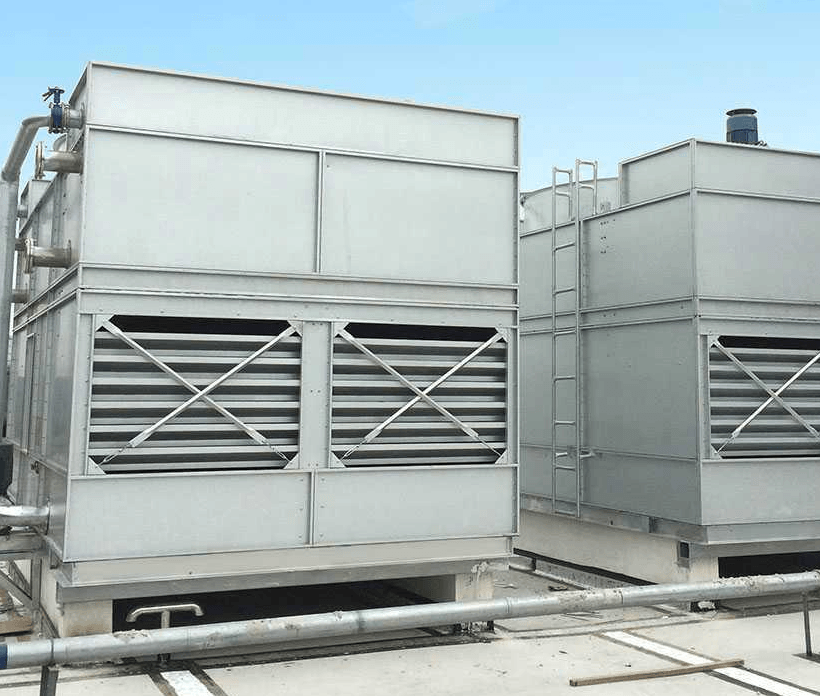
Closed-circuit cooling towers keep fluid inside a closed loop. The fluid does not mix with outside water. Water sprays over a coil. Air blows across the coil. This cools the fluid inside. You get less contamination and save water.
Here is a table that explains how closed-circuit cooling towers work and their benefits:
Feature | Description |
|---|---|
Operation | The fluid stays inside a closed loop. It does not touch outside water. |
Heat Transfer | Water sprays over a coil. Air moves over it. This cools the fluid and stops too much evaporation. |
Contamination | Less risk of contamination because fluid stays separate. |
Water Conservation | Fluid is reused, so water is saved. |
Maintenance | Needs less upkeep because there is less fouling and scaling. |
Treatment Costs | Lower water treatment costs because less water is used. |
Closed-circuit cooling towers are good where water quality matters. They help you spend less on upkeep and water treatment. Seagull uses new designs and technology. The company has over 100 patents. These patents cover new cooling tower products, energy-saving designs, and special parts for better performance.
Here is a table that highlights Seagull’s innovation in cooling tower technology:
Patent Type | Description |
|---|---|
Technical innovation of cooling tower components | New ideas for cooling tower parts. |
New cooling tower products | New products for cooling towers. |
Design optimization for energy saving | Changes to use less energy in cooling towers. |
Special parts research and development | Research on special parts for better cooling towers. |
Seagull’s cooling towers meet strict rules. The company follows EPA’s Clean Water Act and other industry standards. You can trust Seagull to give you safe and reliable cooling towers.
Tip: When picking a cooling tower, think about your space, water needs, and energy use. Seagull offers many types, including crossflow cooling towers and counterflow cooling towers, to fit your needs.
Cooling towers are used in many industries. They help keep factories and plants cool and safe. Power generation, petrochemical, pulp and paper, and mining all need cooling towers. Each industry needs cooling for different reasons. Power plants use cooling towers to cool steam cycles. These towers must handle a lot of water. Petrochemical plants use cooling towers for many steps in their work. Pulp and paper factories use many towers for cooling, pasteurization, and packaging. Mining sites use cooling towers for motors and air underground.
Here is a table that shows where cooling towers are used and which types are best:
Industrial Sector | Common Applications | Preferred Types of Cooling Towers |
|---|---|---|
HVAC | Comfort cooling for large buildings | Mechanical draft, Cross-flow |
Refrigeration | Cold storage for food and medicine | Mechanical draft, Counter-flow |
Power Generation Plants | Heat removal from steam cycles | Natural draft, Mechanical draft |
Industrial Plants (Oil & Gas) | Heat rejection from processes | Mechanical draft, Counter-flow |
Passive draft cooling towers are also called natural draft towers. They work well in power plants. Wet cooling towers are used in pulp and paper and mining. These towers can handle lots of water.
Cooling towers are used in many commercial buildings. You find them in hospitals, hotels, offices, and schools. They help keep the air cool and comfortable. Wet cooling towers are used in malls, airports, and universities. These towers help control temperature and save energy.
You see cooling towers in:
Clinics and hospitals
Laboratories and office buildings
Hotels and schools
Universities and airports
Shopping centers and storage buildings
Passive draft cooling towers are good for big spaces. They work well when you need steady cooling.
Seagull makes special cooling towers for many uses. You can get products for power plants, petrochemical, pulp and paper, and mining. Seagull uses new technology to save energy and water. The company cares about the environment and follows strict rules.
Seagull’s cooling towers have features like variable frequency drives. These features help control fan speed and use less energy. Seagull’s designs help lower your carbon footprint. You can trust Seagull for cooling towers that work well in any industry.
Seagull cares about saving energy and helping the planet. Their cooling towers work well and are good for the environment.
It is important to have a cooling tower that works well. Each type of cooling tower has its own level of efficiency. Natural draft towers, like hyperbolic cooling towers, use their shape to move air. These towers are good for big spaces. They cool well and do not use much energy. Mechanical draft cooling towers, such as induced draft cooling towers and forced draft cooling towers, use fans to move air. This lets you control how much cooling you get. It is helpful when the weather changes a lot.
Closed-circuit cooling towers keep the water clean by keeping it away from outside air. These towers use both air and water spray to cool things down. This helps them work well even when it is tough outside. Hybrid draft cooling towers use both wet and dry ways to cool. You can pick which way to use. This helps you save water or get better cooling. Wet cooling towers cool by letting water turn into vapor. This cools best but uses more water. Dry cooling towers save water but may not cool as well when it is hot.
Tip: Seagull’s cooling tower parts are made to work well and stay quiet. You get good cooling and use less energy.
You should think about how hard it is to take care of a cooling tower. Natural draft towers do not have many moving parts. This means you do not have to fix them often. You still need to watch out for cold weather. This stops too much steam from forming. Mechanical draft towers, like induced draft towers and forced draft cooling towers, need you to check fans and motors often. You also need to clean them and use chemicals to stop germs from growing. Closed-circuit cooling towers need more care because they are closed. You must clean the coils, treat the water, and change parts to keep them working well.
Seagull makes cooling towers that are easy to take care of. Their designs help you fix things fast and keep them running well.
You want to know how much a cooling tower costs. The price can be from $10,000 to $2 million. It depends on the type and size. Crossflow towers do not cost too much at first. They are also easy to fix. Counterflow towers cool better but cost more to buy and take care of. Open-circuit towers are cheaper at first. But you may need to clean the water more, which costs more later. Closed-circuit cooling towers cost more at the start. But you save money because you do not have to change the fluid as much. The water stays cleaner too.
Type | Performance | Maintenance Needs | Cost Range |
|---|---|---|---|
Crossflow | Good for HVAC, steady | Easy to service | Moderate |
Counterflow | High cooling efficiency | More frequent checks | Higher |
Open-Circuit | Simple, fewer parts | Standard | Lower upfront |
Closed-Circuit | Reliable cooling, pure fluid | Complex, more cleaning | Higher upfront, saves later |
Seagull’s new cooling tower parts help you spend less on noise and fixing things. You get good cooling and strong results for your money.
You can choose from three main types of cooling towers: natural draft, mechanical draft, and closed-circuit. Each type works best in different places. When you decide, look at important factors:
Factor | Description |
|---|---|
Cooling Tower Size | Match size to your heat load and temperature needs. |
Efficiency | Pick a tower that keeps energy use low. |
Maintenance | Think about how easy it is to clean and fix. |
Counterflow towers give you strong cooling but need more care.
Crossflow towers are easier to clean but may cool less under heavy use.
Closed-circuit towers keep water clean and need less upkeep.
Seagull offers smart solutions to help you find the right cooling tower for your needs.
You use a cooling tower to remove heat from water. This helps keep machines and buildings cool. The tower lets hot water meet air, which cools it down before it goes back to work.
You look at your space, how much heat you need to remove, and your budget. You also think about how easy it is to clean and fix the tower. Seagull can help you choose.
You find cooling towers in power plants, factories, hospitals, and big office buildings. They help keep equipment safe and rooms comfortable.
You get advanced designs, energy-saving features, and easy maintenance. Seagull uses new technology and holds many patents. You can trust their products to work well in many places.
You should check your cooling tower every month. Clean it as needed to stop dirt and germs from building up. Regular care helps your tower last longer.