


International Layout

+
Seagull Cooling Technologies (Asia Pacific) Sdn. Bhd.


A cooling tower uses evaporative cooling to take heat out of water. Here is how it works, step by step.
You can see cooling towers at power plants and big buildings. They remove extra heat from water used in industrial jobs or HVAC systems. Without them, machines would get too hot and break down.
This post explains the main purpose, the step-by-step process, key parts, and common types. You will learn how warm water spreads over fill material, how air moves upward against it, and why this counterflow design makes it work better. You will also find out what happens in the basin and how different tower designs fit different needs.
By the end, you will clearly understand the full cooling tower work cycle.
Cooling towers use evaporation to take heat out of water, so machines and systems don't get too hot.
The process works by spreading warm water over fill material. Air moves upward and evaporates some of the water, which cools the rest.
Key parts like fill media, drift eliminators, and fans work together to cool more and save water.
Pick between natural or mechanical draft and open or closed circuit designs, depending on what you need for efficiency and upkeep.
You see cooling towers more often than you think. They sit next to power plants, factories, and big office buildings. Their job is simple but very important: they take extra heat out of water that machines and systems use. Without them, equipment would get too hot and stop working.
The main job of large, industrial cooling towers is to take away the heat that circulating cooling water systems absorb in power plants.
Think about a thermal power plant. It burns fuel to make steam, which turns turbines to create electricity. After the steam goes through the turbine, it must turn back into water. This change releases a huge amount of heat. A cooling tower system catches that heat and sends it into the air.
Cooling towers push waste heat from steam condensers into the atmosphere. This keeps the right vacuum for turbines, which directly improves the plant's efficiency and power output.
The same idea works for HVAC systems in large buildings. Chillers make cold water for air conditioning, but they also create waste heat. An industrial cooling tower removes that heat so the chillers keep running well.
Think about water use too. A once-through system pulls water from a river or lake, uses it one time, and sends it back warmer. A cooling tower uses the same water over and over.
Metric | Once-Through (OTC) | Cooling Tower (Recirculating) |
|---|---|---|
Relative water withdrawal | Baseline (100x) | ~5-10x (90-95% reduction) |
Water consumption pattern | Continuous withdrawal from source | Only replacement of evaporation/drift losses |
This big drop in water use makes cooling towers vital in places where water is hard to find.
The core of cooling tower work comes from a basic physical idea: evaporation. When water evaporates, it pulls heat from around it. This is called evaporative cooling.
A cooling tower uses the physical principle of evaporation.
The water turns into vapor in the air and carries heat away with it.
Here is how it works. Warm water spreads over a large area inside the tower. Air moves across that area. Some water molecules gain enough energy to leave the water as vapor. This step needs energy, which comes from the water that stays behind. So, the leftover water becomes cooler.
The driving physics is latent heat of vaporisation.
You see this effect every day. Step out of a shower and feel cool, even in warm air. The water on your skin evaporates, taking heat from your body. Evaporative cooling towers use the same physics on a huge scale.
This method moves heat well without costly refrigerants or compressors. The air does the work by itself. That is why evaporative cooling towers lead the field in industrial heat removal. They offer a simple, low-cost way to handle heat loads. Knowing this helps you see why cooling tower design focuses on getting more air and water contact. More contact means more evaporation, which means better cooling.
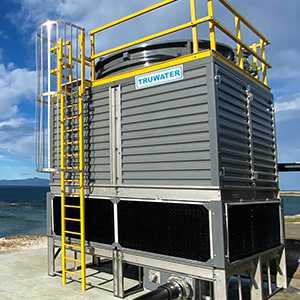
Now you understand the purpose and principle. Let's walk through the actual process. This is the heart of how cooling towers work.
The cooling tower work begins with the return of warm water from your industrial process. This water carries the heat that machines and systems have absorbed.
Hot process water enters the cooling tower through an inlet pipe.
The water is distributed over the fill media using spray nozzles. The fill creates a large surface area for air and water contact.
The fill media is a critical component. You have several options depending on your needs. Splash fill uses staggered slats to break water into droplets, increasing contact area. Film fill forces water into a thin film on PVC surfaces, maximizing surface area for evaporation. Vertical flutes offer good anti-fouling properties, while cross flutes provide high thermal performance. The choice of fill affects how well your industrial cooling tower performs.
Spray nozzle design also plays a key role. The geometric design of the nozzle outlet determines the spray pattern and coverage area. Internal geometry, like swirl inserts, creates finer droplets for better distribution. Axial flow nozzles give precise distribution, while tangential designs are less prone to clogging. A well-designed nozzle ensures uniform wetting of the fill, which is essential for efficient cooling.
Once the water is spread over the fill, air movement begins. In a mechanical draft tower, fans pull air upward through the tower. This is the counterflow design: air flows upward while water flows downward. This design maximizes contact time, which is why it is so effective.
Ambient air is drawn in through the tower and passes through the wetted fill.
As air contacts the water, evaporation occurs. The latent heat of vaporization removes heat from the remaining water, cooling it down.
Cooled water falls into the cold-water basin.
Pumps send this water back to your process for reuse.
Warm, moisture-laden air exits the tower to the atmosphere.
The counterflow direction is important because it gives you higher heat exchange efficiency. You need less air volume and less fan power compared to crossflow designs. The longer contact time between air and water allows more heat to be transferred.
The cooling mechanism relies primarily on evaporative cooling. When water evaporates, it absorbs latent heat. At typical cooling tower conditions (25-40°C), the latent heat of vaporization is about 2,450 kJ/kg.
Latent heat of vaporization of water (hfg) at cooling tower conditions (25–40°C): 2,450 kJ/kg
This means each kilogram of water that evaporates removes a large amount of heat. Evaporation accounts for 70-80% of total heat transfer, while sensible heat transfer accounts for the remaining 20-30%. In a standard HVAC application, you can expect a temperature drop of 5-7°C (typically 5°C). This is the standard design value according to CTI guidelines.
Now you understand how cooling towers work step by step. The warm water enters, gets distributed over fill, air is drawn upward, evaporation cools the water, and the cooled water collects in the basin of the water cooling tower for recirculation. This cycle repeats continuously, keeping your industrial cooling tower performing efficiently.
Every part of a cooling tower system has a special job in removing heat. Knowing these parts helps you see how the whole system works together.
Fill media gives the surface where heat transfer happens. The design of the fill is important. Film fill spreads water into a thin layer on close PVC sheets. This helps air and water touch more, speeding up evaporation. But film fill only works with clean water. Splash fill breaks water into droplets using slats. It handles dirty water better but does not cool as well for its size.
Drift eliminators catch water drops before they leave with the exhaust air. These parts work by inertia. When air changes direction through the eliminator, drops hit the blades, lose speed, and fall back into the tower. Drift eliminators reduce water loss and help prevent scale buildup.
The fan drives the whole evaporation process. In an induced draft design, the fan sits at the top and pulls air up through the tower. This steady airflow removes hot, wet air from the system. Without this removal, the air would get too wet and evaporation would slow a lot. Fan speed controls the air flow rate, so it is the main way to manage cooling.
The basin collects cooled water after it falls through the fill. This part of the cooling tower holds water for the loop. A float valve adds makeup water to replace what evaporated. Water evaporates during the cooling process. The pump suction line takes water from the basin floor and sends it back to your process.
A manufacturer's industrial cooling tower parts include fan stacks, drive shafts, and spray nozzles, all built to last. Each part in your cooling tower operation helps with steady, long-term heat management.
You have two main ways to move air through a cooling tower: natural draft or mechanical draft. Natural draft towers use tall chimneys to make airflow. Warm, moist air rises on its own, pulling cooler air in from below. These towers are huge, often over 100 meters tall. They use almost no energy to move air.
Mechanical draft towers use fans to push or pull air through the system. This gives you much better control over airflow. You can change fan speed to match different heat loads.
Natural draft towers work well for big power plants that run all the time. Mechanical draft towers fit most industrial cooling tower needs because they offer flexibility.
You also pick between open and closed circuit designs. Open-circuit towers let water touch air directly. The water falls through fill media while air moves across it. This design is simple and cheap. But the water picks up dirt from the air, which can clog downstream equipment.
Closed-circuit towers keep the process fluid inside coils. Air and spray water cool the coils from outside. This separation keeps your process water clean. You get lower water treatment costs, less scaling, and steady cooling efficiency over time. The sealed loop also cuts down on evaporation loss.
Flow setup matters too. Crossflow towers move air sideways across falling water. Counterflow towers push air upward while water flows downward. Counterflow designs give better heat transfer because the coldest water meets the coolest air. Some manufacturers offer both setups, plus plume abatement technology that reheats exhaust air to stop visible vapor clouds.
Every cooling tower system uses the same core parts: fill media, drift eliminators, fans, and basins. Your choice of type affects maintenance, energy use, and overall performance. Picking the right water cooling tower for your facility ensures steady heat removal for years.
You now understand the full cycle: warm water enters, spreads over fill, evaporates as air rises, collects in the basin, and returns to your process. Each component matters. Fill media maximizes contact, drift eliminators save water, and fans drive airflow. Your choice between crossflow and counterflow designs affects efficiency and maintenance. Closed-circuit cooling towers protect sensitive applications like data centers and pharmaceutical manufacturing. These decisions shape your entire cooling system's performance. Effective heat removal keeps equipment running reliably. Leading manufacturers continue improving cooling towers with innovative designs and energy-saving components. You can trust that well-chosen cooling towers deliver efficient, sustainable heat management for years.
Evaporation removes water from the system. The cooling tower adds makeup water to replace the lost water. Drift eliminators reduce water loss. A float valve in the basin automatically adds makeup water to replace what evaporates.
Dirty fill blocks airflow and reduces water distribution. This lowers cooling efficiency significantly. Film fill requires clean water to work properly. Splash fill handles dirty water better but cools less effectively. Regular inspection and cleaning keep your cooling tower performing at its best.
Counterflow towers provide higher heat exchange efficiency because the coldest water meets the coolest air. They need less air volume and fan power. Crossflow towers offer easier maintenance access. Your water quality, space constraints, and energy costs determine the best choice for your facility.
Yes, with proper management. You must maintain adequate water flow and heat load to prevent ice formation. Many industrial cooling towers include basin heaters or recirculation lines. Some designs include features that support reliable cold-weather operation across diverse climate conditions.
That visible plume is warm, moisture-laden air meeting cooler ambient air. It condenses into fog-like vapor. Some manufacturers offer plume abatement technology that reheats exhaust air to reduce or eliminate this visible cloud. This feature helps facilities meet aesthetic or regulatory requirements.