

International Layout

+
Seagull Cooling Technologies (Asia Pacific) Sdn. Bhd.


Hollow counterflow cooling towers achieve high efficiency through better air-water contact, less pressure drop, and improved heat transfer. In counterflow towers, air moves upward while water falls downward, which boosts the temperature difference. This setup increases thermal efficiency per square foot. The hollow design removes fill media, cutting resistance. You save energy because fans need less power. Advanced spray nozzles break water into fine droplets, increasing surface area. Drift eliminators catch escaping droplets. Seagull's patented designs optimize these features across their towers, ensuring every unit achieves high efficiency even under demanding conditions. These towers handle tough jobs. These towers reduce maintenance. These towers provide superior heat exchange efficiency. These towers work reliably. These towers perform well in dirty water conditions. This cooling tower design proves its value every day.
Counterflow towers push air upward while water falls downward. This setup makes a big temperature gap. It improves how well heat is transferred.
The hollow design removes the fill media, which lowers air resistance. Fans use less energy, so you save on power costs.
Advanced spray nozzles make very small water drops. This adds more surface area for heat to escape. It boosts cooling efficiency.
Without fill, scaling and fouling go down. That means less upkeep is needed. The tower works dependably for a longer time.
Drift eliminators catch water droplets. This reduces water loss. You save water and treatment chemicals.
The counterflow setup is the key to high-performance cooling. In this design, air goes up while water falls down, creating the biggest possible temperature difference between the two. This basic idea explains why counterflow cooling towers work better than other types. You get the most heat exchange from every square meter of floor space, a fact backed by research and real-world use.
You can picture how the counterflow works by tracking both fluids. Water falls down through the tower while air rises in the opposite direction. This opposite flow means the coolest water meets the coolest air at the bottom. At the same time, the hottest water meets the hottest air at the top. This pairing keeps a strong temperature gap at every point inside the tower. The result is the best heat transfer possible, making the most of the temperature difference.
Studies back this up. Heat transfer goes up as air flow increases. Both air and water speeds matter, with p-values below 0.05. Factorial design analysis shows that fan speed affects performance more than water flow rate. Tower efficiency peaks with higher air flow, lower water flow, and medium water temperature. These results confirm that upward airflow drives performance.
The temperature gap decides how much heat you can pull from the water. Counterflow towers shine here because they keep a strong gap along the whole tower height. The table below compares this against crossflow options:
Tower Type | Temperature Gradient Performance |
|---|---|
Crossflow | Moderate; works but slightly less efficient due to shorter contact time. |
Counterflow | Higher; maximized due to stronger temperature gap and contact efficiency. |
This stronger gap brings real benefits for your operation. The counterflow design takes up less space than other tower types, making it great for tight industrial sites. Better thermal efficiency means lower energy use and thus lower long-term costs. The tower keeps cooling well even in high heat, keeping processes stable in tough conditions.
Seagull's patented designs improve this airflow pattern across their product line. Their engineering team has fine-tuned the counterflow shape through deep research and over 100 patents. Every curve, every angle, and every part placement serves one goal: maximizing air-water contact. This design idea stays central to the high performance of hollow counterflow cooling towers.
You should see that the counterflow setup does more than move fluids in opposite directions. It creates a heat advantage that builds throughout the tower. Each water droplet meets warmer air as it falls, while each air molecule picks up moisture from cooler water. This steady exchange pushes heat exchange efficiency to levels other designs cannot reach. The counterflow towers you pick today will deliver this performance consistently, year after year, because the physics behind them is solid and proven.
The hollow design achieves high efficiency by removing the biggest obstacle to airflow: fill media. Traditional towers pack fill material inside to spread water across a large surface. That approach works, but it creates resistance. Air must push through dense plastic or wood slats, which slows everything down. Your fans then work harder to move the same volume of air. The hollow counterflow cooling tower eliminates this problem entirely. With no fill, air travels through an open chamber. It moves faster, encounters less friction, and reaches every water droplet without obstruction. This simple change delivers measurable gains in performance.
You can think of fill media as a maze. Air enters the tower and must navigate around every sheet, bar, or block of packing material. Each turn costs momentum. Each surface creates drag. The cumulative effect is a significant pressure drop across the tower. When you remove the fill, you remove that maze. Air flows straight up through the hollow chamber with minimal interference. The pressure drop drops dramatically. This reduction means your system does not need to fight against its own internal structure. The hollow counterflow cooling tower achieves high efficiency because it lets physics work in your favor rather than against you.
This design choice also simplifies maintenance. Fill media traps dirt, scale, and biological growth over time. You must clean or replace it regularly to keep performance steady. Without fill, you avoid that entire chore. The open chamber stays cleaner longer. Seagull has engineered their hollow towers specifically for low maintenance operation. Their expertise shows in every detail, from the smooth interior surfaces to the strategic placement of spray nozzles. You spend less time on upkeep and more time running your process.
Fan energy represents a major portion of your cooling tower operating costs. The hollow design cuts this expense directly. Because air moves freely, your fan does not need as much power to push the same volume through the tower. You get the same cooling effect with less electrical input. This improvement in energy efficiency shows up clearly in real-world comparisons.
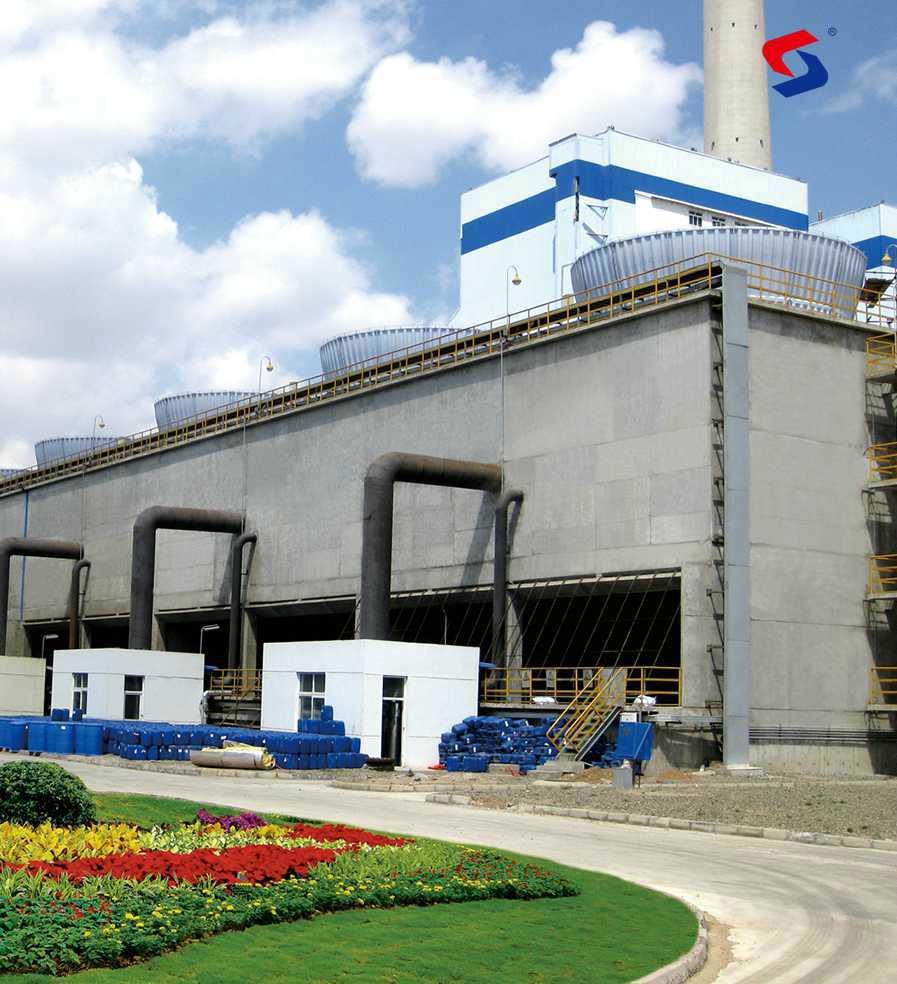
According to industry guides, counterflow towers can reduce fan energy consumption by 5–10% compared to crossflow towers that use fill. This saving comes directly from the reduced pressure drop in the counterflow arrangement.
That 5–10% reduction translates into real money over a year of continuous operation. You also gain a secondary benefit. Lower fan speed means less noise. Your tower runs quieter, which matters in urban settings or near office areas. The hollow design achieves high efficiency across multiple dimensions: energy, maintenance, and acoustics.
The thermal efficiency of your system improves too. With less resistance, air distributes more evenly across the tower's cross-section. You avoid dead zones where water falls without meeting fresh air. Every droplet gets exposed to moving air, which maximizes heat transfer. The counterflow cooling towers from Seagull incorporate this hollow principle into their core design. Their engineers have refined the chamber shape to promote smooth, uniform airflow. The result is a tower that performs consistently, even as conditions change throughout the day.
You should also note that the hollow design reduces scaling and fouling. Fill media provides surfaces where minerals can deposit and clog the tower. Without those surfaces, you have fewer places for scale to form. Your nozzles stay clear, your water distribution stays uniform, and your heat exchange efficiency stays high. This benefit compounds over time. A tower that resists fouling maintains its performance longer, which protects your investment.
The counterflow fill you might find in traditional towers adds weight and cost to the structure. Removing it lightens the load on your foundation and reduces initial material costs. The hollow design achieves high efficiency not just in operation but in construction as well. You get a simpler, more robust tower that delivers reliable cooling for years.
The spray nozzle system sits at the heart of the hollow counterflow cooling tower's performance. These nozzles transform a solid stream of water into millions of tiny droplets. This transformation happens without any additional energy input. You gain a massive increase in surface area for evaporation. The result is a direct boost to your system's energy efficiency.
Droplet size controls how much heat you can extract from water. Smaller droplets expose more surface area to the passing air. Halving the mean droplet size doubles the surface area available for heat absorption. This simple relationship drives the entire cooling process. For gas cooling applications, a droplet size of 20–80 μm provides the most efficient heat absorption. Larger droplets create voids when they impact surfaces, which reduces the heat transfer coefficient and limits evaporative cooling.
The physics works in your favor. Each tiny droplet acts as a miniature heat exchanger. Warm water meets cool air across an enormous combined surface area. The evaporation rate climbs, and the water temperature drops faster. You achieve the same cooling effect with lower water flow rates. This reduction in required flow directly cuts pumping energy. Seagull's nozzle technology, developed through over 100 patents, delivers this fine atomization consistently across their entire product line.
Even distribution matters as much as droplet size. When water spreads evenly across the tower's cross-section, every air molecule contacts water. Dry spots or oversaturated areas hinder heat transfer. Channeling creates low-flow zones where mineral deposits and microbiological colonies form. These colonies degrade thermal performance over time.
The patent CN119665726B confirms that equal water pressure and flow paths across all distribution pipes achieve uniform water distribution, which significantly improves cooling efficiency.
You can ensure uniform distribution through proper nozzle selection and placement. Consider these factors:
Flow rate per nozzle must match the tower's circulating water flow
Available pressure determines nozzle selection in pressurized systems
Spray pattern and coverage diameter must cover the full fill surface
Nozzle spacing and distance to fill require careful calculation
Orifice size affects the spray pattern and must be checked regularly
Uniform distribution delivers measurable benefits. Consistent thermal gradients across the tower ensure even heat transfer. The cooled water temperature approaches the wet bulb temperature more closely. Process control becomes stable, which matters for industries requiring precise temperature regulation. Scaling and fouling decrease because dry zones disappear. Your maintenance frequency drops, minimizing downtime and repair costs.
The hollow counterflow cooling towers from Seagull integrate these nozzle principles into their core design. Their engineering team has refined every component to work together. You get a system where fine atomization and uniform coverage combine. The result is superior heat exchange with minimal energy waste. Your towers operate at peak performance, day after day, without constant adjustment.
The hollow counterflow cooling tower gives you benefits that grow over time. You skip the maintenance problems that older systems face. You also save water with smart design. These perks make this tower a wise choice for the long run.
Older towers use counterflow fill to spread water over a big area. That fill traps minerals, dirt, and germs. Scale builds up on the plastic sheets. Fouling blocks airflow. You must stop the tower for cleaning or swap out the fill. These stops cost you money and cut how often the system runs.
The hollow design fixes this issue. With no counterflow fill, there are no surfaces for scale to form. Water drops freely through an open space. Minerals pass through without sticking. Your nozzles stay clean. Your airflow stays steady. The tower keeps its heat transfer performance without constant fixes.
This design works great for dirty water jobs. Seagull builds their hollow towers for hot and contaminated water sources. Their patented designs handle tough conditions that would clog a filled tower. You get steady operation where other systems fail.
Less fouling also protects your energy use. Clean towers move air easier. Your fans use less power. Your pumps push water through clear nozzles. Every part works as it should. You avoid the slow drop in performance that filled towers suffer.
Saving water matters just as much as saving energy. Every drop that escapes your tower is lost water and wasted treatment chemicals. Drift eliminators catch these drops before they leave. They push air through several direction changes. The water drops hit the eliminator surfaces, gather, and fall back into the tower for reuse.
ASHRAE Standard 189 limits drift loss to 0.001% of circulated water volume for counter-flow towers and 0.005% for cross-flow towers, representing the accepted industry standard for minimizing water loss.
The table below shows what this means for your setup:
Aspect | Detail |
|---|---|
Mechanism | Physical barriers and direction changes force air to release trapped water drops, which are then sent back into the tower for reuse. |
Loss without eliminators | Up to 2% of circulating water volume per day (CTI estimate) |
Loss with high-efficiency chevron eliminators | Less than 0.001% of recirculating water flow |
Implied water savings | Nearly 2% of circulating water volume |
You save almost 2% of your circulating water each day. That cut lowers your makeup water costs. It also reduces the chemicals you need for water treatment. The counterflow cooling towers from Seagull come with high-efficiency drift eliminators as standard gear. Their design meets the toughest performance rules while keeping pressure drop low.
These operational benefits work together. Less fouling means steady heat exchange. Less drift means lower water use. Your hollow counterflow cooling tower runs cleaner, uses fewer resources, and gives dependable cooling for years. The design choices you make today pay off throughout the tower's life.
The counterflow arrangement, hollow chamber, advanced spray nozzles, and drift eliminators work together in these towers. Each element supports the others. The counterflow cooling towers maximize heat exchange efficiency through opposing airflow. The hollow design reduces pressure drop, so your fans use less energy. Fine spray nozzles increase surface area for heat transfer. Drift eliminators recapture water droplets. This combined design and operation achieves high efficiency across every system. You gain lower energy consumption and reduced maintenance. These towers handle dirty water and high temperatures well. The design proves reliable in demanding applications. Explore this technology further. Consult experts like those at Seagull to find the right solution for your facility. Their engineers can match a tower to your specific needs.
The open chamber takes out the fill material. Air moves freely with no blocks. Your fan uses less power. This design saves energy and causes less wear on the towers.
Air goes up as water falls down. The temperature gap stays strong all through the tower. These towers make the most contact and push heat from water into air well.
With no fill, you skip cleaning or swapping packing material. Scale and fouling have fewer spots to grow. Your spray nozzles stay clear. The towers run reliably with less idle time.
The hollow design gives high efficiency with lower fan energy. It works better with dirty water and high heat. Your long-term costs go down. These towers need less upkeep.