


International Layout

+
Seagull Cooling Technologies (Asia Pacific) Sdn. Bhd.


A cooling tower is a special device that removes extra heat from a building or factory by evaporating water. This works like your body sweating to cool down. You will see two main uses: industrial processes and HVAC systems. Just as sweat evaporates from your skin, water evaporates inside the tower to take away heat.
The global cooling tower market size in 2023 was USD 3.75 billion, according to the report.
This shows how important these systems are. A water cooling tower uses evaporative cooling to reject heat efficiently. The exchanger inside the tower moves heat to the air. The cooled water then flows back into the system. Knowing how these cooling tower systems work helps you see their role in modern buildings and cities.
Cooling towers take away heat by letting water evaporate, just like sweat cools you down.
There are two main kinds: natural draft and mechanical draft, and each one has different trade-offs in energy use and control.
Fill media and drift eliminators are important parts that help the cooling tower work better and lose less water.
Regular cleaning and disinfecting stops Legionnaires' disease and keeps the system safe.
Modern cooling towers save water and energy, and upgrades pay for themselves in 4 to 8 months.
Think of a cooling tower as a giant radiator for water. Your car uses a radiator to remove heat from engine coolant. A cooling tower does the same job, but on a much bigger scale. It moves waste heat from water into the air. This keeps industrial equipment and building systems from getting too hot.
Industrial facilities create huge amounts of heat when they run. Power plants, petrochemical refineries, and manufacturing plants all depend on this equipment. These places use water to soak up heat from machines and chemical reactions. That hot water must cool down before it can be used again. An industrial cooling tower handles this job well.
The tower gets hot water from the facility's processes. Inside the tower, the water gives off its heat to the air around it. Cooled water then goes back to the facility ready for reuse. This ongoing cycle stops equipment from failing and keeps safe operating temperatures. Without proper cooling, production would stop and machinery would get damaged.
Custom-engineered solutions serve these demanding sectors, with designs that handle the tough needs of continuous operation. Each unit matches the specific heat load and flow rate of its use. This tailored approach boosts performance and extends equipment life.
Buildings also rely on cooling tower systems for comfort. Large commercial structures use chillers to make cold water for air conditioning. The chiller pulls heat from building air and moves it to condenser water. That condenser water gets hot and needs cooling. A water cooling tower provides that key service.
The chiller-condenser loop runs nonstop during warm months. Hot condenser water flows to the tower, where evaporation removes the heat. Cooled water returns to the chiller to pick up more heat. This cycle keeps indoor temperatures comfortable and efficient.
Modern cooling tower systems offer big energy benefits. Variable flow capabilities adjust water movement to match demand. This flexibility cuts electricity use during partial-load conditions. Smart control systems watch performance and adjust operation automatically. These features lower operating costs while keeping reliable cooling.
The efficiency of your HVAC system depends a lot on the cooling tower. A well-kept tower ensures the chiller works at its best. Regular service and proper water treatment keep the system running smoothly. This care prevents costly breakdowns and extends equipment life.
Evaporative cooling works on a simple idea: water takes in heat when it turns from liquid to vapor. You see this when sweat cools your skin on a hot day. A water cooling tower uses the same idea on a big scale. The process moves heat from warm water into the air through controlled evaporation.
The cycle starts when hot water from your facility enters the tower. Spray nozzles spread this water evenly over the fill media below. At the same time, fans pull large amounts of air upward through the tower. The air and water meet as the water falls and the air rises.
This contact starts the cooling effect. A small part of the water evaporates, taking heat from the remaining water. The cooled water gathers in a basin at the bottom, ready to return to your system. The warm, moist air leaves through the top of the tower.
The temperature drop across a typical cooling tower system follows a standard benchmark. According to the Baltimore Aircoil Company, a nominal cooling tower ton cools 3 GPM of water from 95°F to 85°F. That 10°F drop represents the usual design target for HVAC applications.
Evaporation drives this whole process. A common engineering rule says that for every 10°F of cooling range, about 1% to 1.5% of the recirculating water volume is lost to evaporation. This small loss produces most of the cooling effect. The remaining water keeps circulating, which makes the system very efficient.
The approach temperature shows how well your tower performs. This value equals the difference between the cold water temperature and the wet bulb temperature. A well-kept tower usually achieves an approach of 5–7°F. A smaller approach means your cooling tower works closer to the lowest possible temperature, showing better performance.
Optimizing the air-to-water ratio boosts cooling efficiency. Engineers call this the L/G ratio, which compares water mass flow to air mass flow. You calculate it using the formula L/G = (h₂ - h₁) / (T₁ - T₂), where T₁ is hot water temperature, T₂ is cold water temperature, h₂ is exhaust air enthalpy, and h₁ is inlet air enthalpy. A higher ratio improves heat transfer but raises pumping costs. A lower ratio saves energy but may reduce cooling capacity. The best balance depends on your specific operating conditions.
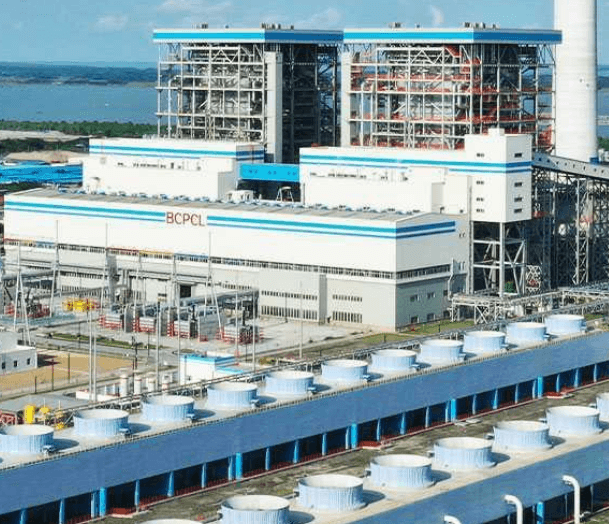
Fill media plays the most important role in evaporative cooling. This material increases the surface area where water and air meet. More surface area means more heat transfer and better cooling. Two main types exist, each with distinct features:
Aspect | Splash Fill | Film Fill |
|---|---|---|
Design | Uses horizontal bars/layers to break water into droplets | Uses thin PVC sheets with textured channels to spread water into a thin film |
Cooling mechanism | Increases surface area by creating more droplets | Maximizes water-air contact through thin film exposure |
Efficiency in clean water | Slightly less efficient due to reduced thin-film exposure | Higher cooling efficiency |
Clogging risk | Low - open structure resists clogging | High - prone to blockage by dirt, debris, or scale |
Water quality requirement | Tolerates dirty water or high solids content | Requires better water quality and regular maintenance |
Best application | Industrial systems with fluctuating water quality | Clean water systems where maximum efficiency is prioritized |
Film fill provides a larger surface area for heat dissipation, making it more efficient. However, splash fill handles dirty water better. Innovative fill media designs optimize this trade-off, delivering high efficiency while maintaining durability.
Drift eliminators catch water droplets before they escape with the exhaust air. Without these parts, you would lose valuable water and chemicals. Modern high-efficiency drift eliminators achieve very low drift rates. Industry leaders report rates as low as 0.0004% to 0.0005% of total circulating water volume. This precision reduces water use and protects nearby equipment from moisture damage.
These two parts work together to make your cooling tower systems reliable and efficient. Proper fill media maximizes heat transfer, while drift eliminators minimize water loss. Together, they ensure your cooling tower delivers steady performance year after year.
When picking a cooling tower for your facility, you have several design options. Each choice affects efficiency, cost, and upkeep. Knowing these differences helps you pick the right tower for your needs.
Natural draft towers use air density differences to move air. Warm, moist air inside the tower rises on its own because it weighs less than cooler outside air. This creates steady airflow without any fans. These huge structures often go over 100 meters tall. They fit power plants and other big industrial operations that run all the time.
Mechanical draft towers use fans to push or pull air through the unit. This gives you exact control over airflow no matter the weather outside. You can change fan speed to match cooling needs, which boosts efficiency during partial loads. Mechanical draft designs lead the market for most industrial cooling tower uses because they offer flexibility and take up less space.
The energy trade-off matters for your operating budget. Natural draft towers use no mechanical fans, so they use less electricity and cost less to run. However, mechanical draft towers use a lot of power to run their fans. You must compare this ongoing energy cost against the lower starting price and better control that mechanical systems provide.
The direction of air and water flow marks another key difference. In crossflow towers, water falls straight down through the fill while air moves sideways across the falling water. This design lets gravity spread water evenly without high-pressure nozzles. Crossflow towers give moderate thermal efficiency and easier maintenance access.
Counterflow towers push air upward while water falls downward, creating a direct opposite flow exchange. This setup maximizes the temperature difference and contact time between air and water. As a result, counterflow towers usually deliver higher heat transfer efficiency than crossflow designs. You get better performance per square foot of space, though you may need higher-pressure spray systems.
Your choice of construction material affects lifespan and total cost of ownership. Three main options exist, and all are available in the market:
Cost Aspect | FRP Cooling Towers | Traditional (Concrete) Cooling Towers |
|---|---|---|
Initial Cost | Higher upfront cost | Lower initial cost |
Long-term Cost | Cost-effective over time | Increased operational expenses |
Maintenance Cost | Lower; longer intervals due to corrosion resistance | Higher; frequent inspections and protective coatings needed |
Energy Cost | 12-15% improvement in energy efficiency under high-humidity conditions | Reliable performance but potentially higher energy consumption |
The lifespan comparison between materials depends heavily on your environment:
Environment | FRP Lifespan | Hot-Dip Galvanized Steel Lifespan |
|---|---|---|
Aggressive chemical/marine | 20-25 years | Red rust within 3-5 years (coastal) |
Wastewater (H2S exposure) | 20-25 years | Replacement required in under 5 years |
Moderate industrial | 25-30 years | Not specified |
A petrochemical refinery case study shows this gap clearly. Galvanized steel grating lost 30% of its zinc coating after 4 years and faced replacement at year 6. Nearby FRP showed no measurable wear in the same period. For harsh environments, FRP gives better value despite its higher starting price. Reinforced concrete stays useful for massive installations where structural strength matters most. Your cooling tower system design should include these material trade-offs along with your site conditions and budget limits.
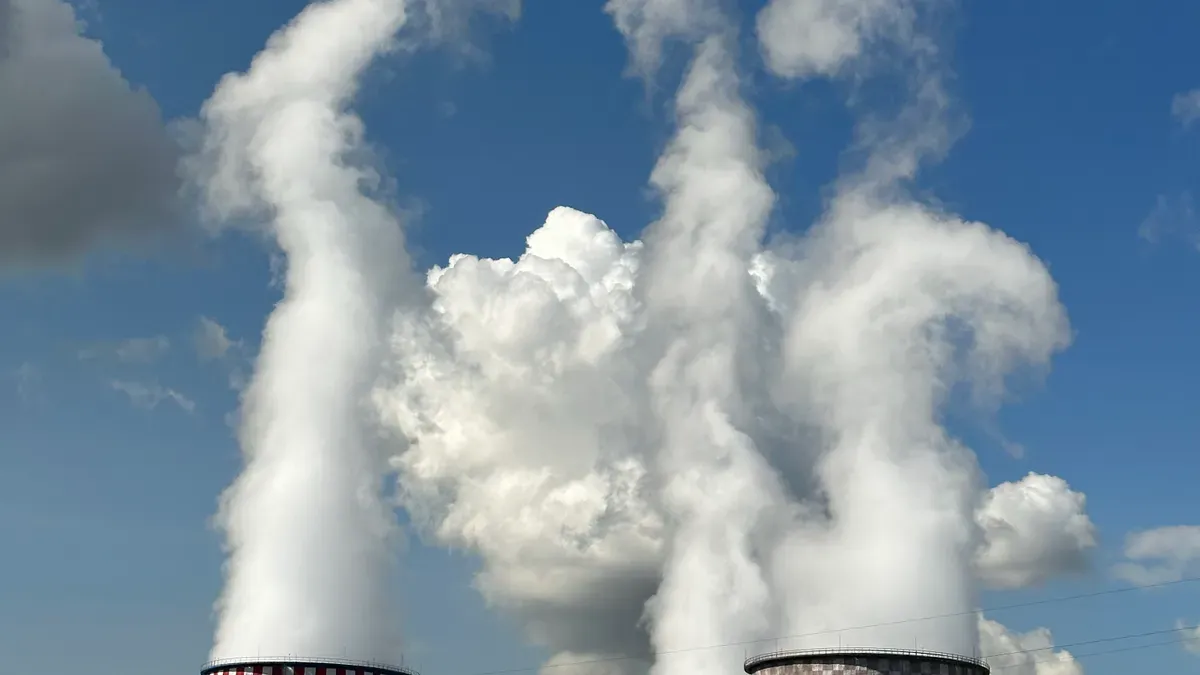
Cooling tower systems do more than just control temperature. They use water, consume energy, and need regular upkeep. Knowing these factors helps you manage costs and keep people safe.
Every cooling tower loses water through evaporation and drift. The usual rate is about 1.8 gallons per ton-hour of cooling. Your actual use depends on how you run the system. Different situations create different water use patterns:
Operating Scenario | Water Consumption Rate (gallons per hour per ton) |
|---|---|
Typical office building (temperate/warm climate) | 1.8 |
High runtime (data centers, hospitals, continuous HVAC) | 2.0 – 2.2 |
Seasonal or partial load operation | 1.5 |
Newer designs cut down on water waste. High-level water collection catches drift that older towers lose. Plume abatement technology reduces visible water vapor. These features save water while keeping cooling performance strong.
Energy savings help balance water costs. High-efficiency fans and variable flow controls adjust power use to match demand. Upgrading your cooling tower pays off fast:
Payback period for typical mid-size commercial buildings in Sun Belt cities: 4 to 8 months
Example: A typical mid-size commercial building recovers its upgrade cost within 4 to 8 months.
These savings make modern cooling tower systems worth the investment. Your industrial cooling tower can pay for itself within one operating season.
Legionella bacteria can grow in warm water. Your cooling tower creates perfect conditions if you skip maintenance. This risk needs serious attention from every facility manager.
Biocides kill Legionella effectively. You can pick oxidizing types like chlorine and bromine for fast results. Non-oxidizing options like amines and thiocarbamates last longer. A dual biocide plan works best. Use both types together to stop biofilm and kill bacteria through different methods.
Regular cleaning removes organic matter that feeds bacteria. After removing sludge, chlorinate the system using sodium hypochlorite or calcium hypochlorite. Disinfect the tower basin, fan housing, distribution pan, and sump thoroughly.
At a minimum, cooling towers should be cleaned and disinfected regularly — at start-up and shut-down — and more often as your water management program and water conditions dictate.
Smart control systems watch water quality all the time. These systems alert you to conditions that help bacteria grow. This proactive approach keeps your industrial cooling tower safe and compliant. Proper maintenance protects both your equipment and your community.
Cooling towers remove heat by using evaporative cooling. You now know how they take waste heat from water and put it into the air. The main types are natural draft versus mechanical draft, and crossflow versus counterflow designs. Choosing the right material is very important for how long the tower lasts and how well it works.
Environmental issues like water use and health risks like Legionnaires' disease need attention. Good maintenance and new technology can lower these dangers. Intelligent controls check water quality all the time.
Knowing how cooling tower systems work helps you make better choices for your building. You can pick the right cooling tower, set up maintenance schedules, and improve how it runs. This knowledge helps you balance efficiency, safety, and cost in all cooling uses.
You should clean and disinfect your cooling tower regularly, as recommended by industry best practices. Plan cleanings when you start up the system and when you shut it down. Your water management plan may ask for more cleanings. Regular cleaning removes dirt and organic matter that feed bacteria, and it keeps your cooling system working well.
Legionella bacteria grow in warm, still water. Your cooling tower can become a perfect home for them if you do not keep up with maintenance. Biocides kill these bacteria well. Use both oxidizing and non-oxidizing types together for the best results. Smart control systems check water quality all the time and warn you when conditions become unsafe.
How long your cooling tower lasts depends on what it is made of. FRP towers last 20-25 years in harsh chemical or marine environments. Hot-dip galvanized steel may show red rust within 3-5 years near coastlines. Reinforced concrete works well for very large installations where strong structure matters most. Pick your materials based on your site conditions.
Yes, modern cooling tower systems cut energy use by a lot. High-efficiency fans and variable flow controls adjust power to match what you need. A typical mid-size commercial building gets back its upgrade cost within 4 to 8 months. This quick payback makes upgrading your cooling tower a smart choice for your facility.
Evaporation drives the whole cooling process. For every 10°F of cooling range, about 1% to 1.5% of recirculating water volume escapes as vapor. This small loss creates most of the cooling effect. High-level water collection and drift eliminators cut down on waste, making your industrial cooling tower more efficient.