


International Layout

+
Seagull Cooling Technologies (Asia Pacific) Sdn. Bhd.


A cooling tower is a device that removes waste heat using evaporative cooling. It cools water for reuse in factories and HVAC systems. Why is this important? Without cooling towers, factories and buildings would overheat, causing equipment to fail and costly downtime.
These systems spray hot water over fill material while air flows through it. A small amount of water evaporates, taking heat away and cooling the rest. A cooling tower with high-efficiency motors and variable speed drives can cut electricity use by up to 80%. Speed control also reduces water use by about 22% each year.
This guide explains how cooling towers work, their main parts, types, and uses in industry. Readers learn how to choose, run, and care for these systems. Knowing cooling tower design helps buyers make smart choices. Each type has its own benefits. Good maintenance helps towers last longer. A good choice gives reliable performance.
Cooling towers use evaporative cooling to pull heat out of water. This method works well because when water evaporates, it removes a large amount of heat.
The fill material gives water and air a big area to touch. This helps the tower cool water quicker and use less power.
Pick between crossflow and counterflow towers based on your space and climate. Crossflow works better when water flow changes. Counterflow cools more efficiently in small spaces.
The wet-bulb temperature is the key factor in how well a cooling tower works. The tower can only cool water to roughly 5-7°F above the outside wet-bulb temperature.
Regular maintenance and water treatment help cooling towers run well. Dirty fill, clogged nozzles, and poor water chemistry reduce efficiency and cause breakdowns.
Cooling towers use a simple but strong physical process. Knowing how they work helps engineers and managers see why these systems are so effective. The main idea is evaporative cooling, where water loses heat as it turns into vapor.
The evaporative cooling process starts when hot water from a factory or HVAC system goes into the cooling tower. A spray system sends this hot water over fill material, making a thin layer over a large area. At the same time, fans pull outside air through the tower. This air moves over the wet fill, causing a small part of the water to evaporate.
Evaporation needs energy. When water molecules change from liquid to gas, they take heat from the water around them. This energy transfer removes heat from the remaining water, making its temperature drop a lot. The cooled water collects in a basin at the bottom of the tower and goes back to the system for reuse.
The latent heat of vaporization of water, about 1,000 Btu/lb at normal air conditions, makes this process very efficient. Evaporation uses a lot of energy to turn water from liquid to gas. This energy comes from the remaining water, causing a big temperature drop even when only a small amount evaporates.
Fill media makes the surface area larger for water to spread out, helping heat transfer by making evaporation more efficient. Good fill media can greatly reduce the energy needed to cool the water.
The fill material is very important in this process. Different options are available:
Aspen (excelsior) fiber pads: Old-style fill material, usually about 1.5 inches thick per layer, held in a net.
Modern rigid media (plastics, melamine paper): Often 8–12 inches thick, gives more surface area for water, and cools air better than thinner aspen media.
Modern fill designs let cooling towers work better while taking up less space.
Cooling towers use two main heat transfer methods: sensible heat transfer and latent heat transfer. Sensible heat transfer happens because of temperature differences. When cooler air touches warmer water, heat moves directly from the water to the air. This method helps cool the water but is not the main one.
Latent heat transfer is the main cooling method. This method involves evaporation, where water takes in energy to change phase. The specific enthalpy of vaporization for water at about 85°F, a normal cooling tower operating temperature, is about 1,045 BTU/lb. This number shows why evaporation does most of the cooling. In fact, latent heat transfer makes up about 90–91% of the total enthalpy increase in a cooling tower system.
A calculation example shows how efficient this is. Think about a recirculation rate of 150,000 gpm with a range of 27°F. Evaporation of only 3,159 gpm from this system gives a correction factor of 0.78. This example shows how latent heat transfer can cool water well with very little water loss.
The relationship between airflow and water flow decides overall performance. Properly designed cooling towers balance these factors to maximize heat exchange while using as little energy as possible. Engineers adjust fill depth, air speed, and water distribution to get the desired cooling effect.
Knowing these operating principles helps buyers compare different cooling tower designs. The evaporative process, combined with efficient heat transfer methods, makes cooling towers very important for industrial operations. Each cooling tower type uses these principles in different ways, which affects performance, maintenance needs, and operating costs.
Every cooling tower uses important parts that work together to remove heat well. Knowing these parts helps workers find issues early and plan maintenance better.
The fill material makes a large surface for heat transfer. Hot water spreads over the fill while air flows through, so water and air touch as much as possible. Different materials suit different operating conditions:
Material | Advantages |
|---|---|
PVC | Durable, resistant to chemical corrosion, cost-effective |
Polypropylene | Suitable for high-temperature environments |
Wood | Traditional, used in legacy towers, requires more maintenance |
Stainless steel / Ceramics | Used in highly corrosive or high-temperature environments |
Drift eliminators catch water drops from the exhaust air. This stops water loss and lowers the chance of spreading harmful stuff. PVC drift eliminators usually last 8–12 years in normal use. Check them every year. Replace any worn parts right away. Plan to replace all of them every 10 years or when many parts are bent or cracked.
The water distribution system has spray nozzles and pipes that spread hot water evenly over the fill. In counterflow towers, spray nozzles are very important. They spread hot water over the media at low pressure. These parts need the most maintenance. If they fail, cooling performance drops and the media can get damaged. A better nozzle design works well even at low pressure by making the right droplet size and spread. New nozzles let workers change spray patterns and flow rates to match different conditions.
Fans pull air through the tower. Axial fans move a lot of air at low pressure. Centrifugal fans work better when higher pressure is needed. The basin gathers cooled water at the bottom. The casing surrounds the whole tower and protects parts from weather and dirt.
Supporting systems keep the tower working well. Fan stacks guide air flow. Drive shafts link motors to gearboxes. Gearboxes slow down the motor speed to match the fan needs. Access doors let workers get inside for checks and repairs.
Some optional gearbox add-ons help with maintenance. These include oil heaters, pressure switches, level switches, temperature switches, vibration switches, splash guards, and wear sleeves. These parts check the gearbox's health and keep key moving parts from breaking too soon.
Seagull sells many cooling tower parts, like heat transfer media, spray nozzles, drift eliminators, fan stacks, and drive shafts. These parts work with your current system. They help the tower run reliably and make maintenance easier.
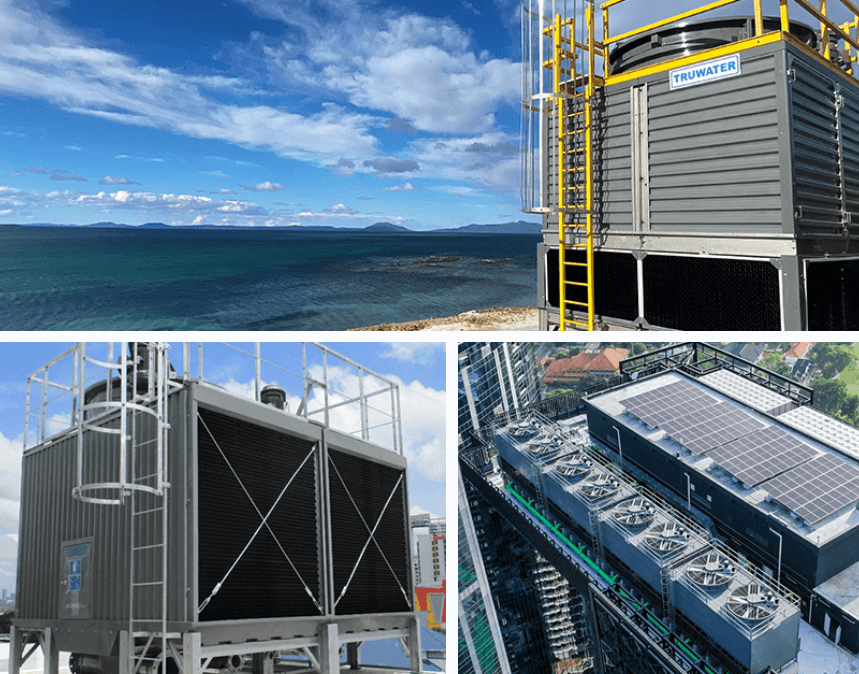
Cooling towers come in several designs. Engineers sort them by how they create airflow and how they transfer heat. Knowing these types helps buyers pick the right cooling tower for their needs.
There are two main types based on airflow: natural draft and mechanical draft. Natural draft towers use natural convection. Warm air rises, creating airflow without fans. These towers save energy because no fans run. However, they offer less control over cooling capacity. They respond slowly to load changes.
Mechanical draft towers use fans to move air actively. These fans use electricity. But they provide greater control over performance. They can adapt to changing conditions. This makes them more consistent across different weather and load situations. Both types of mechanical draft towers offer reliable performance.
Another way to classify involves the heat transfer method. Open (wet) cooling towers use evaporative cooling through direct contact between water and air. Closed (dry) cooling towers keep water inside coils. Air flows over the coils without direct contact. This prevents water loss but reduces cooling efficiency. These types of dry systems work well in water-scarce regions.
Hybrid systems combine both evaporative and dry cooling methods. These types offer significant water savings. Hybrid designs can cut annual water use by 90% or more compared to traditional towers. They stay strong during extreme heat events. They can also use reclaimed or grey water when needed. This saves fresh water. A hybrid cooling tower gives operators flexibility.
Two common types of cooling tower setups exist within mechanical draft towers: crossflow and counterflow. In crossflow towers, air flows horizontally across the falling water. The water distribution system uses gravity-fed basins. Crossflow towers handle variable water flow better. They offer better turndown capability. However, they require more plan area. They are also more prone to freezing in cold climates.
In counterflow towers, air flows vertically upward against the falling water. This design maximizes air-water contact time. It provides higher thermal efficiency in a more compact footprint. Counterflow towers resist freezing better because spray nozzles distribute the water. But they need larger pumps. This increases energy use. Maintenance access is also more challenging. Engineers must weigh these factors when choosing a cooling tower type.
Both types serve different applications. Crossflow works well where space allows a larger footprint. Counterflow suits projects with limited space. Each cooling tower type offers distinct advantages depending on the site conditions. The right choice depends on climate, available space, and budget.
Seagull offers a complete lineup of cooling tower types. The product range includes crossflow and counterflow cooling towers. It also includes closed-circuit evaporative coolers and specialized units for various industries. These industries include power generation, petrochemical, pulp and paper, sugar, mining, and metals. Each industry requires a specific cooling tower type for optimal performance. Seagull provides all types of cooling solutions for these sectors.
Seagull holds over 100 patents for cooling tower innovations. These patents cover technical innovations in components, new product development, and design optimizations for energy saving. One key innovation is plume abatement technology. A plume abatement system combines wet and dry cooling sections. The dry section reheats the saturated exhaust air. This reduces the relative humidity. This type of system helps facilities meet environmental regulations.
Other Seagull innovations include super low noise operation, high-level water collection, and intelligent control systems. These features address specific challenges in different environments. Low noise designs suit urban areas. Intelligent controls optimize energy use based on real-time conditions. Seagull also offers various types of parts and components for easy maintenance.
Seagull customizes solutions for specific industrial requirements. The company serves clients across Asia Pacific with local support. Whether a project needs a standard packaged unit or a large-scale industrial installation, Seagull delivers performance, durability, and energy efficiency. Engineers can rely on Seagull for any cooling tower type they need.
Several key numbers show how well a cooling tower works. Engineers use these numbers to compare designs and predict how towers will act in real life. Knowing these factors helps operators get the most from their systems.
Cooling range is the temperature gap between hot water going into the tower and cold water coming out. A bigger range means the tower removes more heat. Approach is the gap between the cold water outlet temperature and the wet-bulb temperature outside. The wet-bulb temperature is the lowest cold water temperature an evaporative cooling tower can reach.
The wet-bulb temperature is the most important design number. An evaporative cooling tower makes water warmer than the wet-bulb temperature, with the approach depending on design and operating conditions. This link directly affects the temperatures you can get:
Ambient Wet-Bulb Temperature | Achievable Cold Water Temperature (Approach depends on design) |
|---|---|
Higher | Higher |
Lower | Lower |
Lower wet-bulb temperatures let the tower make colder water. Higher wet-bulb temperatures, common in summer, lower the tower's cooling power. This number directly affects cooling tower efficiency. A smaller approach means better cooling tower efficiency because the tower gets water closer to the lowest possible temperature. Operators watch approach values to spot performance drops over time. A rising approach often means dirty fill or blocked nozzles. Regular checks help keep cooling tower efficiency high.
Airflow rate plays a big part in cooling tower performance. The link between airflow and cooling power follows a clear pattern:
Airflow Condition | Primary Effect on Cooling Capacity | Secondary Consequences |
|---|---|---|
Too Low | Cooling power drops; water outlet temperature rises | Equipment may overheat |
Too High | Cooling power is not the limiting factor | Fan power use rises; operating costs go up; too much evaporation increases water use |
The airflow rate must stay balanced. Too little airflow directly lowers cooling power. Too much airflow adds waste without giving more cooling. This balance directly affects cooling tower efficiency.
Humidity also changes performance a lot. The cooling tower removes heat through enthalpy, where the heat gained by the air must match the heat lost by the water. When humidity is high, the air cannot take in much more moisture, so the tower must rely more on sensible heat transfer, which works less well.
"The capacity of a cooling tower is severely reduced during high humidity periods and I have seen the cooling water temperature suddenly rise in a rainstorm." — Qalander (Chem), Gold Member, ChE Plus Subscriber
Water flow rate matters too. More water flow gives more surface area for heat transfer but cuts the time water spends in the tower. Operators must match water flow to the tower's design specs. Seagull's design improvements focus on saving energy and cutting use. These upgrades help keep cooling tower efficiency steady in different weather. Good system design plans for seasonal changes in temperature and humidity. This forward-looking method keeps cooling water temperatures steady all year.
Regular maintenance keeps a cooling tower running at its best. Without it, performance drops, energy costs go up, and equipment breaks down early. A good maintenance plan takes care of both mechanical parts and water chemistry.
The fill material needs the most attention. Over time, scale, dirt, and slime build up on fill surfaces. This buildup blocks airflow and reduces heat transfer. Workers should check fill media often and clean or replace damaged parts. Common causes of lower efficiency include dirty fill, air recirculation, wrong fan placement, and poor water spread. Each problem has a fix, but catching issues early stops costly downtime.
Fouling Type | Recommended Frequency | Trigger Condition |
|---|---|---|
Light scale deposits | As needed | Fouling score or LSI above threshold |
Heavy calcium carbonate scale | As needed | Fill channel blockage visible, approach temp rising |
Biological slime | Immediate response | ATP above action threshold or visible slime |
Particulate plugging | As needed | Basin sediment depth above threshold |
Collapsed fill sections | Replacement | Structural collapse or permanent deformation |
Spray nozzles also need regular checks. Clogged nozzles spread water unevenly, leaving dry spots on the fill. This lowers cooling tower efficiency a lot. Workers should remove and clean nozzles during planned shutdowns. Drift eliminators need checking for cracks or bending. Damaged eliminators cause water loss and raise the risk of spreading germs.
Fans and bearings need regular oiling. Workers should check belt tension and alignment each month. Loose belts slip, reducing airflow and wasting energy. Worn bearings cause shaking that hurts the whole tower. A simple vibration check catches these problems early. Seagull designs its cooling towers with easy-to-reach parts and strong materials, making routine maintenance simple for plant crews.
Water chemistry directly affects cooling tower life. When water evaporates, dissolved solids like calcium, magnesium, chloride, and silica build up. High levels cause scale on heat transfer surfaces and corrosion. Both problems lower cooling tower efficiency over time. Good water treatment stops these issues before they start.
Chemical treatment programs use two main types of biocides. Oxidizing agents like chlorine and bromine kill bacteria fast but don't last long. Non-oxidizing agents work slower but stay in the system longer. Using both types together gives better protection. This mix also prevents biofilm, which can hide Legionella bacteria from treatment. For Legionella control, workers should keep a measurable disinfectant level throughout each day. Hyperchlorination alone doesn't work well because bacteria can return within weeks.
Water treatment costs give a useful benchmark. A cost that is too high or too low may indicate the program is not working well. Physical methods like filtration and side-stream treatment help chemical approaches. Seagull's cooling towers work well with these strategies, offering easy access for water sampling and treatment injection points.
Many industries use cooling towers to get rid of extra heat. Each industry needs different things for temperature control, saving water, and dependability. Learning about these uses helps engineers pick the best system for their plant.
Power plants depend a lot on cooling towers to cool steam condensers. After steam spins the turbines, it must turn back into water to be used again. This process releases a huge amount of heat. Cooling towers take that heat away well. The main cooling needs are high thermal efficiency, small space, and low maintenance for good exhaust steam cooling.
Condenser systems come in different setups. Water-cooled types use semi-welded plate or shell-and-tube heat exchangers. Air-cooled systems use wet surface air coolers. Each type has its own benefits based on water supply and site conditions. A plate condenser can handle cooling loads at low pressures. It performs much better than regular shell-and-tube designs and needs a much smaller space for heat transfer.
The amount of water used is very different for each cooling system type. The table below shows how much U.S. power plants use each type:
Cooling System Type | Share of U.S. Thermoelectric Capacity | Water Use Characteristics |
|---|---|---|
Recirculating (wet) | Majority | Reuses cooling water in closed-loop piping |
Once-through (wet) | Significant | Withdraws large amounts of water, discharges at higher temperatures |
Dry & Hybrid | Small | Dry uses significantly less water than wet; hybrid combines both methods |
Electric power generation uses a large share of all water withdrawn in the U.S. Dry cooling systems cost more to build and lower plant efficiency, but they use significantly less water than wet systems. Hybrid systems work as dry systems in cooler months and switch to wet mode in hotter months. This flexibility helps plants balance saving water with getting the best performance.
Besides power generation, petrochemical plants use cooling towers to cool their processes. Pulp and paper mills cool their water and equipment. Sugar refineries control heat during crystallization. Mining and metal operations cool furnaces and smelting equipment. Commercial HVAC systems get rid of heat from chiller plants in big buildings. Each use needs a specific cooling tower setup.
Seagull has a lot of experience in many different industrial projects. The China Energy Bangladesh Payara Coal-fired Power Plant Project shows Seagull's ability to handle large-scale power generation. This project needed strong cooling solutions for constant operation in tough conditions. Seagull provided systems that keep stable performance under heavy heat loads.
The Shougang Group Steel Plant Project shows Seagull's skill in metals processing. Steel making creates a lot of heat that needs steady cooling. Seagull made special solutions to fit the plant's exact needs. These projects show how Seagull customizes each cooling tower design for the customer.
Seagull helps customers across Asia Pacific with local support. Their engineering team works closely with clients to learn about their heat loads, space limits, and environmental rules. This team effort makes sure each installation works well. With over 100 patents in cooling tower technology, Seagull keeps coming up with new ideas for all cooling tower uses.
Cooling towers remain essential for heat rejection across countless industries. They rely on the simple yet powerful principle of evaporative cooling. Understanding the main components—fill, drift eliminators, fans, and basins—helps operators maintain efficiency. Each cooling tower type offers distinct trade-offs. Crossflow designs handle variable flow better, while counterflow units maximize thermal efficiency in compact spaces. Wet, dry, and hybrid systems each serve different water conservation needs. Performance depends on wet-bulb temperature, airflow, and water flow rates. Proper maintenance and water treatment prevent scale, corrosion, and biological growth. These practices extend equipment life and reduce operating costs. Buyers should evaluate their heat load, available space, noise limits, and water quality before selecting a cooling tower. Seagull offers innovative, patent-backed solutions for diverse applications. Their expertise helps clients choose the right cooling tower type for specific industrial requirements.
Crossflow towers handle changing water flow better and are simpler to maintain. Counterflow designs cool more efficiently in less space and resist freezing better. Buyers should think about available space, weather, and pump energy costs before choosing.
The wet-bulb temperature matters most. It shows the lowest temperature that evaporative cooling can reach. A tower makes water warmer than the outside wet-bulb temperature, with the approach depending on design. Higher wet-bulb conditions lower cooling power a lot.
Workers should check spray nozzles regularly and drift eliminators once a year. Fans and bearings need regular checks for belt tension and vibration. Fill material needs regular checks for scale and biological growth. Regular inspection prevents costly downtime and keeps cooling tower efficiency high.
Dirty fill material blocks airflow and lowers heat transfer. Clogged nozzles spread water unevenly, leaving dry spots. Scale buildup from poor water chemistry insulates heat transfer surfaces. Rising approach temperatures often signal these issues. Regular cleaning and water treatment stop performance decline.
Physical methods like filtration and side-stream treatment help, but chemical treatment stays necessary. Without biocides and scale inhibitors, biological growth and mineral deposits harm the system. Legionella bacteria can also grow in untreated water. A balanced treatment program protects both equipment and health.