

International Layout

+
Seagull Cooling Technologies (Asia Pacific) Sdn. Bhd.


When you look at crossflow towers and counterflow cooling tower systems, you can see they work in different ways. They also need different things to run well. The table below shows how each cooling tower type compares in efficiency, footprint, pump head, maintenance, water quality, and cost:
Metric | Crossflow Tower | Counterflow Tower |
|---|---|---|
Thermal Efficiency | Good; works well at part-load | Excellent; best for high heat loads |
Lateral Footprint | Bigger footprint | Smaller footprint |
Pump Head | Low (uses gravity) | High (needs pressure) |
Maintenance Access | Great; easy to reach | Limited; may need shutdown |
Water Quality Tolerance | High; handles solids easily | Low; needs clean water |
Capital Cost | Usually lower | Usually higher |
These differences are important when you plan a project or run a facility. Seagull’s Crossflow cooling tower has a design that makes water spread better and improves heat exchange. It does this by removing packing materials. This lets you get better cooling, even if water quality changes.
Crossflow towers are simple to take care of because they have an open design. This makes it easy to clean them and fix any problems fast.
Counterflow towers cool better, especially when there is a lot of heat. They work well in places like power plants and data centers.
Think about how much space you need. Crossflow towers need more space. Counterflow towers are smaller and fit in tight spots.
Pick crossflow towers if you want flexible use and lower setup costs. Counterflow towers cost more at first but use less energy over time.
Both types need regular care. This stops breakdowns and keeps them working well.
There is a big difference in how air moves in these towers. In crossflow towers, air comes in from the sides. It moves sideways across the fill. Water falls straight down and crosses the air. In counterflow towers, air goes straight up. Water falls straight down at the same time. This makes air and water move in opposite directions.
Here is a simple table that shows how air and water move:
Cooling Tower Type | Airflow Direction | Water Flow Direction |
|---|---|---|
Crossflow | Horizontal | Downward |
Counterflow | Vertical | Downward |
Seagull’s Crossflow cooling tower uses special airflow patterns. There is less air resistance, so fans do not work as hard. This helps save energy and lowers costs. Water spreads out evenly because of gravity. This is important for good cooling and easy maintenance. Hot water falls down through the fill media. This helps keep cooling even everywhere.
Feature | Benefit |
|---|---|
Lower Air Resistance | Fans do not work as hard, so you use less energy and spend less money. |
Gravity-fed Water Distribution | Water spreads out evenly, which helps with cooling and makes maintenance easier. |
Natural Downward Flow | Hot water falls down, so cooling stays even in the tower. |
Tip: Less air resistance in crossflow towers can help you save money on energy bills.
The way water moves also changes how well the tower cools. In crossflow towers, water falls down while air moves sideways. In counterflow towers, water falls down and air moves up. This means counterflow towers let air and water touch for a longer time. That helps them cool better.
Cooling Tower Type | Water Flow Direction | Air Flow Direction | Heat Exchange Efficiency |
|---|---|---|---|
Crossflow Cooling Tower | Horizontal | Vertical (crosses) | Lower efficiency because air and water touch for less time and water does not spread as evenly. |
Counterflow Cooling Tower | Vertical (downward) | Vertical (upward) | Higher efficiency because air and water touch for longer and water spreads out evenly. |
You should think about which pattern works best for you. Crossflow towers are good if you want easy maintenance and can change water flow rates. You can change the flow by using different orifices. Counterflow towers cool better and more evenly, but it is harder to get inside them when they are running.
Areas of Consideration | Cross-flow | Counter-flow |
|---|---|---|
Size | Needs more space but can be shorter than counter-flow | Takes up less space than crossflow |
Maintenance and Operation | Easy to reach nozzles and parts | Harder to reach inside, may need to stop the tower for checks |
Water Flow Rate | You can change the flow by changing orifices | Flow stays the same because you cannot reach the nozzles |
Note: If you want easy maintenance and flexible use, crossflow towers may be better for you. If you want the best cooling, counterflow towers are a good choice.
These facts can help you pick the right cooling tower for your needs. How air and water move is important for cooling and maintenance. Seagull’s Crossflow cooling tower gives you good airflow and works well for many types of factories.
You must think about space when picking a cooling tower. Crossflow towers need more room as they get bigger. Their design spreads water over a wide area. These towers are common where land is easy to get. In cities or tight spaces, finding room can be hard. Modular construction helps with this problem. You can build the tower in parts. This makes it easier to install in small spaces. It works well for buildings and factories that must stay open. Modular towers also lower labor costs and keep work disruptions small.
Here is a table showing how crossflow and counterflow cooling towers compare in size and site needs:
Feature | Crossflow Cooling Towers | Counterflow Cooling Towers |
|---|---|---|
Footprint | Usually bigger footprint for larger towers | Smaller footprint for towers around 800 tons |
Maintenance Access | Changes based on design | Often allows for easier access |
Operational Weight | Heavier because of the design | Lighter in smaller setups |
Tip: Modular cooling tower construction lets you fit a crossflow tower into places where regular towers cannot go.
Counterflow towers have a compact design. You can use them in places with little space. The vertical shape uses less ground area. This makes counterflow towers good for cities or places with strict space rules. Cooling works well because air and water move in opposite ways. Facility layout is easier with a counterflow cooling tower.
Here is a table showing the benefits of counterflow towers:
Advantage | Description |
|---|---|
Space Efficiency | Great for facilities where space is tight. |
High-Efficiency Cooling | Gets strong cooling because air and water move opposite. |
Less Space Requirement | Needs less space than crossflow towers. |
Note: If you want to save space and still get good cooling, a counterflow cooling tower can help you reach your site planning goals.
Crossflow towers are easy to work on. The open design lets you reach important parts fast. You can get to the fill, nozzles, and basins without trouble. Cleaning, checking, and fixing these parts is quick. This helps your system run well and stops problems before they start.
You can clean often to stop scale and rust.
It is simple to check for problems early.
Repairs are fast, so your facility does not stop for long.
Doing regular work keeps your tower working longer and better.
Doing regular maintenance saves money and stops sudden breakdowns.
Seagull’s crossflow towers use strong materials and smart ideas. The system works well even in tough places. The company gives help and service when you need it.
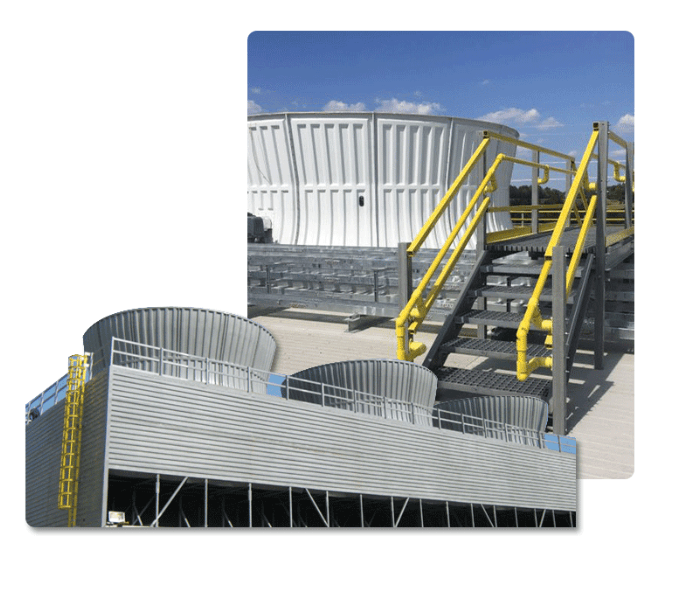
Counterflow towers are harder to work on. The tall, tight design makes it hard to get inside. Sometimes you must turn off the tower to check or fix things. This can stop your work and cost more money.
If you cannot clean or check the fill, problems can grow. Dirty fill can make heat transfer drop by up to 40%. Your chillers must work harder and use more energy. This can wear out your equipment faster. Germs and rust can also be bigger problems in these towers.
Germs can cause health and safety problems.
Rust makes the tower weaker and does not last as long.
Broken parts can cost a lot and stop your work.
If you do regular work, you can save up to 30% on energy.
If a fan motor breaks, it can cost your facility thousands each day.
Tip: Plan regular maintenance to keep your tower safe, working well, and reliable.
You need to know how much a cooling tower weighs before you install it. Crossflow cooling towers come in different sizes. Small towers weigh between 500 and 2,000 pounds. Medium towers weigh from 2,000 to 10,000 pounds. Large industrial towers can weigh over 10,000 pounds. The weight affects how you build the foundation. If the tower is heavy, you must make the foundation strong so it does not sink or collapse.
Heavy towers need special equipment for transport.
Even weight distribution keeps the tower stable.
A strong foundation helps the tower last longer.
You must check the soil to make sure it can hold the weight.
Tip: Always plan for the weight of your cooling tower to avoid problems during installation.
Counterflow cooling towers often have a compact design. They may weigh less than crossflow towers of the same capacity. This makes them easier to install in tight spaces. You still need a strong foundation, but the load is usually more concentrated. You must check the site and soil before you build.
Here is a table showing what you need for a good foundation:
Requirement | Description |
|---|---|
Structural Integrity | The foundation must support the tower and handle wind or earthquakes. |
Soil Conditions | You must test the soil to see if it can hold the tower. |
Levelness | The foundation must be flat for good water flow and cooling. |
Anchorages | Secure the tower so wind does not move it. |
Chemical Resistance | Use coatings to protect against water treatment chemicals. |
Accessibility for Maintenance | Make sure there is space for technicians to work. |
Compatibility with Design | The foundation must match the tower’s design. |
Environmental Considerations | Prevent leaks and protect the environment. |
Note: You should always match the foundation to the cooling tower’s weight and design. This keeps your system safe and efficient.
Crossflow cooling tower systems use gravity to move water. Water falls from the top and spreads over the fill. This makes the system simple and reliable. You can check and fix the water system easily. Maintenance teams can reach the fill and basins without problems.
Here are some ways gravity-based systems help you:
Water flows evenly, so it does not sit still. This keeps the cooling tower working well.
You can check and clean the system fast. This means you spend less time fixing things.
Cold weather does not freeze the water as much. Water keeps moving, so freezing is rare.
Aspect | Benefit |
|---|---|
Reliability | Gravity keeps water moving and stops it from sitting still. |
Maintenance Needs | Easy to reach parts, so you do not need to turn off the tower for repairs. |
Cold Weather Adaptability | Less chance of freezing, so your system works in winter. |
Tip: Gravity-based water systems help your cooling tower last longer and need fewer repairs.
Counterflow cooling tower systems use pressurized spray nozzles. Water sprays over the fill from above. This works well when water flow is low. You can control water easily, but you must watch for problems.
Advantages | Disadvantages |
|---|---|
Easy to control water at low flow rates | Freezing happens more in cold weather |
Costs more to install and fix | |
Hard to change how much water flows | |
Louder than crossflow cooling towers |
Pressurized systems need more care. If water flow slows down, freezing can happen. It is hard to reach the nozzles for cleaning. You must plan for higher costs and more checks.
Note: If you want a cooling tower that is easy to take care of, gravity-based systems in crossflow towers are more reliable and need less work.
Crossflow towers help save energy when cooling needs change. They work well if your system does not always run at full power. The design lets water move easily, so pumps use less energy. You can clean and fix parts without stopping the tower. This keeps the cooling tower working smoothly.
Many factories and buildings pick crossflow towers for easy maintenance. These towers are good if you want flexible operation and have enough space. You can save money on service with this type. The table below shows which cooling tower fits different jobs:
Cooling Tower Type | Energy Efficiency | Capacity Characteristics | Maintenance | Ideal Applications |
|---|---|---|---|---|
Counterflow | Higher thermal efficiency | Compact design, good for tough jobs | Harder to check | Best for big factories |
Crossflow | Lower thermal performance | Easier maintenance, less pump work | Easy to fix | Good for places where maintenance matters and space is not tight |
Tip: Pick crossflow towers if you want easy access and lower pump energy use.
Counterflow cooling towers are best for jobs with lots of heat. Their design makes air and water move in opposite ways. This helps them cool better and use less energy. Fans do not need to work as hard, so energy bills go down. These towers are great for power plants and data centers. They keep cooling strong all the time.
The table below shows how counterflow and crossflow towers compare:
Feature | Counterflow Cooling Towers | Crossflow Cooling Towers |
|---|---|---|
Thermal Efficiency | Higher efficiency for big heat jobs | Lower efficiency |
Heat Exchange Capability | Better heat exchange because of the design | Not as good at heat exchange |
Fan Power Requirement | Needs less fan power, saves energy | Uses more fan power |
Ideal Applications | Power plants, data centers | General uses |
Note: Choose counterflow cooling towers for tough jobs where you need strong cooling and good energy use.
You should pick your cooling tower based on your site and cooling needs. Crossflow towers are good for systems that need easy maintenance. Counterflow towers are best for places with high energy needs and lots of heat.
You see fill as the heart of a cooling tower. Fill increases the surface area for water and air to touch. In crossflow towers, fill sits in a wide, open space. Water flows down over the fill, and air moves across it from the sides. This setup lets you reach the fill easily for cleaning or replacement. You can spot problems early and fix them fast.
The fill in crossflow towers often uses splash or film types. Splash fill breaks water into droplets. Film fill spreads water into thin sheets. Both types help water cool as it meets air. You get steady cooling, even if water quality changes. You can clean the fill without stopping the cooling tower. This keeps your system running longer.
Tip: Easy access to fill means you spend less time on maintenance and keep your cooling tower efficient.
Counterflow towers use a different fill arrangement. Fill sits in a vertical column inside the tower. Water falls straight down through the fill, while air moves up from below. This design gives you more contact between water and air. You get higher heat transfer efficiency.
The fill in counterflow towers usually uses film fill. Water spreads into thin layers, and air moves through these layers. This setup cools water faster. You see better performance in places with high heat loads. The fill is harder to reach for cleaning. You may need to stop the cooling tower for maintenance.
Tower Type | Fill Arrangement | Maintenance Access | Heat Transfer Efficiency |
|---|---|---|---|
Crossflow | Horizontal, easy to reach | Simple, quick | Good, steady |
Counterflow | Vertical, hard to reach | Needs shutdown | Excellent, fast |
Note: If you want the best heat transfer, counterflow towers offer strong performance. If you value easy maintenance, crossflow towers make your job simpler.
Fan placement in a crossflow cooling tower can change. Designers use axial or centrifugal fans. Axial fans sit on top and pull air through the fill. Centrifugal fans are used for special needs, like indoor spaces or noise control. The fan type depends on your site and how much air you need.
Here is a table showing fan types for each tower:
Cooling Tower Type | Fan Type | Application Notes |
|---|---|---|
Crossflow | Axial or Centrifugal | Can use either fan type, depending on design and application needs. |
Counterflow | Axial or Centrifugal | Centrifugal fans are suitable for indoor applications with low height requirements. |
Fans in crossflow towers often work harder. The airflow path is longer and not straight. This can make the tower louder. You may hear more noise near the tower, especially with big axial fans. Fans use more energy because they must push air through resistance.
Tip: To lower noise, pick a centrifugal fan or add sound barriers around your cooling tower.
Fans in counterflow cooling towers are usually at the top. They pull air straight up through the fill. This makes the airflow path shorter and more direct. Fans do not work as hard, so energy use is lower. Counterflow towers can be up to 10% more efficient than crossflow towers.
Noise is often lower in counterflow towers. The compact design helps keep sound down. These towers are good for places where noise matters. Centrifugal fans are common in small or indoor systems. They work well when you need a low-profile design.
Cooling Tower Type | Noise Levels | Energy Efficiency |
|---|---|---|
Counterflow | Relatively lower | Up to 10% greater efficiency than crossflow |
Crossflow | Can be higher | Generally less efficient |
Note: If you want a quieter and more efficient system, a counterflow cooling tower may be best for you.
When you choose a cooling tower, you need to think about how much it costs to install. Crossflow towers often cost less to set up. Their open design makes them easier to build and place on your site. You can use simple foundations, and you do not need special pumps. This helps you save money at the start.
Counterflow cooling tower systems usually cost more to install. Their compact shape means you need a stronger foundation. You may need special pumps and extra piping. These towers often need more planning before you build them. If your site has limited space, the higher cost may be worth it.
Here is a table to help you compare:
Cost Area | Crossflow Tower | Counterflow Cooling Tower |
|---|---|---|
Foundation | Simple, less expensive | Stronger, more expensive |
Pumps | Standard, low cost | Special, higher cost |
Piping | Basic | More complex |
Site Prep | Easier | Needs more planning |
Tip: If you want to save on installation, crossflow towers are often the better choice.
You also need to look at long-term costs. Crossflow towers are easy to check and clean. You can reach the fill and nozzles without stopping the system. This means you spend less on labor and repairs. You can keep your cooling tower running longer with regular care.
Counterflow towers may cost more to maintain. Their tight design makes it hard to reach inside. You might need to shut down the tower for big repairs. This can lead to higher labor costs and more downtime.
Here are some things to remember:
Crossflow towers need less energy for pumps.
Counterflow towers use less fan power, which can lower your energy bills.
Easy access in crossflow towers means fewer service calls.
Note: Think about both the starting price and the long-term costs before you pick a cooling tower.
You can easily see that crossflow and counterflow cooling towers are not the same. Crossflow towers are simple to take care of, cost less to run pumps, and let you change how they work. Counterflow towers cool better and use less space. Look at this table to see how they compare:
Feature | Crossflow Tower | Counterflow Tower |
|---|---|---|
Maintenance Access | Easy | Hard |
Footprint | Larger | Smaller |
Energy Efficiency | Good at part-load | Best for high heat |
Pick the tower that matches your space, how much cooling you need, and how much money you want to spend. Knowing these things helps you choose well and makes your building work better.
You see air and water move in different ways. Crossflow towers let air flow sideways across falling water. Counterflow towers push air straight up as water falls down. This changes how each tower cools water.
You find crossflow towers easier to maintain. Their open design lets you reach parts quickly. You can clean and check the fill without stopping the system. Counterflow towers have tighter spaces, so maintenance takes more effort.
You get reliable performance from crossflow towers in cold weather. Gravity-fed water keeps moving, so freezing happens less often. This helps your cooling system stay efficient during winter.
You should look at your space, cooling needs, and maintenance plans. Crossflow towers fit sites with more room and easy access. Counterflow towers suit places with limited space and high cooling demands.