

International Layout

+
Seagull Cooling Technologies (Asia Pacific) Sdn. Bhd.


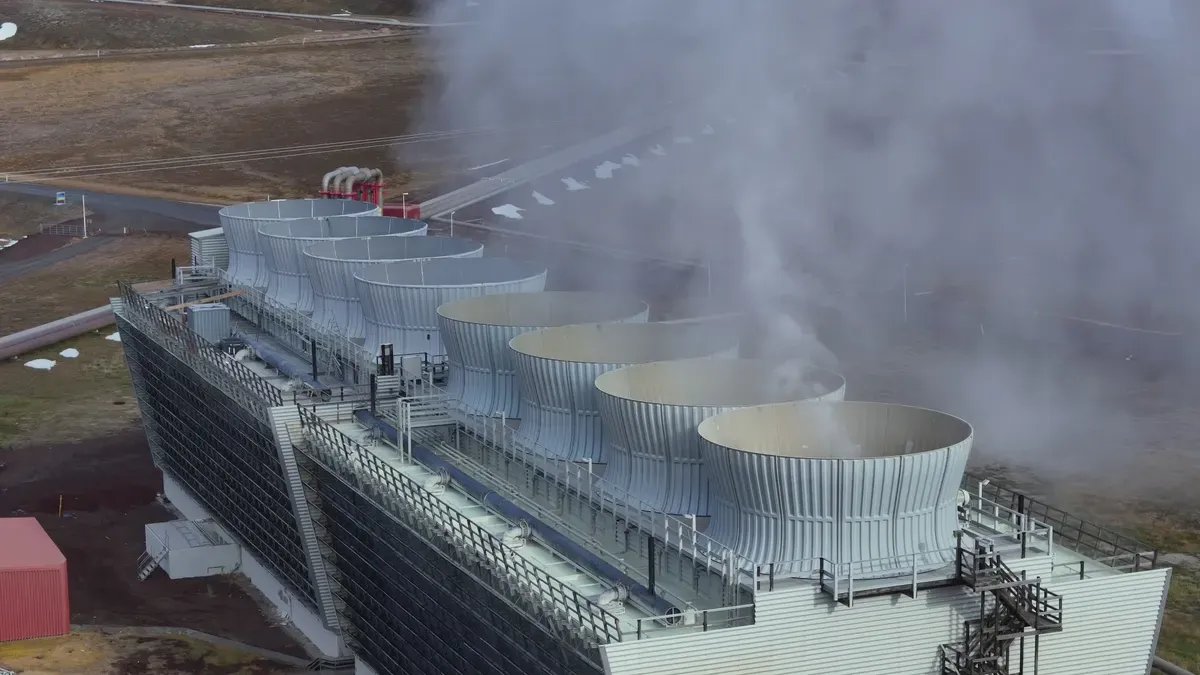
A high level water collection cooling tower saves pump energy by lowering the total static head. Water gathers at a raised point. Water flows straight to the pump suction. This cuts down the vertical lift. Seagull's High Level Water Cooling Tower removes the usual ground-level sump. What if your cooling system could run with much less pump power but still keep thermal performance? This article explains hydraulic principles. It shows how much energy you save. It looks at data center cooling uses. You will see how evaporative free cooling towers cut power use. Knowing these designs helps you compare cooling choices. Water management gets easier. Water moves smoothly. Water use drops. Tower efficiency improves. Data center cooling needs reliability. Data center cooling also needs efficiency. You can get both with less power. This technology gives real benefits for modern facilities.
A high level water collection cooling tower saves pump energy because it lowers the vertical lift required.
This design gets rid of the ground-level sump, letting water flow straight to the pump suction.
Lower static head means the pump uses less power, so it saves energy every time it runs.
Data centers save money on running costs and work better with this cooling tower design.
The high level design also cuts down on noise and upkeep, saving money over time.
First, you need to know how a normal cooling tower works. A standard design uses a deep basin at ground level. This basin sits at the bottom of the tower. It catches all the cooled water after it falls through the fill material. Then the pump has to lift this water from the basin back up to the top of the system. This vertical distance creates a large static head. The pump works hard to overcome this height. You pay for that work in electricity. The pump uses power with every cycle. This old setup wastes energy because the water drops all the way to the ground. Then the pump pushes it all the way back up. You can see the waste in this loop.
Seagull's high level water collection cooling tower changes this basic setup. The design places a collection sump at the base of the packing material. This sump sits high above the ground. The water never falls to ground level. Instead, the packing guides the cooled water into this raised sump. You remove the deep ground-level basin completely. The tower structure holds the sump at this high position. This simple change means water no longer travels that long vertical distance. The water stays elevated during the whole collection process. You cut the total lift requirement by a lot. This design also saves water because the system loses less water to splashing and drift. The raised collection point keeps more water in the active cycle. You reuse the same water over and over with little loss. This approach is a smarter way to handle cooling water.
The raised sump connects directly to the pump suction port. You do not need a long suction pipe running from ground level. The water flows straight from the collection sump into the pump inlet. This direct connection shortens the distance the pump must lift the water. You reduce the static head part of the total pump head. Static head is the elevation difference between the water source and the discharge point. A normal tower might need a 10-meter lift. Seagull's design cuts this lift to just a few meters. You remove the biggest factor in pump energy use. The pump uses less power because it does less work against gravity. This reduction applies to every cycle of operation. You save energy all day long.
The hydraulic principle is simple. Total pump head equals static head plus friction head plus pressure head. Static head is the largest part of this equation in most cooling systems. The high level water collection cooling tower targets this biggest part directly. You lower the elevation difference between the water source and the pump. The pump suction gets higher inlet pressure because the water sits above it. This positive suction head reduces the work needed from the pump. You get the same water flow with less power input. The pump runs more efficiently across its whole range. This design works especially well for evaporative cooling towers and mechanical evaporative cooling systems. You can use this principle for onsite cooling towers of many sizes. The energy savings grow with the height reduction. Every meter of removed lift turns directly into lower power use. You get immediate operational benefits from this design change.
You need to understand total dynamic head (TDH) before you can see the savings. TDH is the total energy a pump must give to move fluid through a system. The formula has four parts: static head, pressure head, friction loss, and minor losses. Static head is the vertical distance from the supply water surface to the delivery point. Pressure head is the leftover pressure needed at the delivery point. Friction loss comes from the Darcy-Weisbach equation, which finds energy lost as water rubs against pipe walls. Minor losses capture the effect of fittings, bends, and valves.
Head Component | Value (m) | Calculation Method |
|---|---|---|
Static Head | 16.5 | z₂ − z₁ (vertical distance from supply water surface to delivery point) |
Pressure Head | 2.0 | Required residual pressure at the delivery point (e.g., roof tank) |
Friction Loss | 1.815 | Darcy-Weisbach equation: h_f = f × (L/D) × (V²/2g) |
Minor Losses | 0.546 | K-value method: h_m = Σ(K × V²/2g) for fittings |
Total Dynamic Head (TDH) | 20.86 | Sum of all components above |
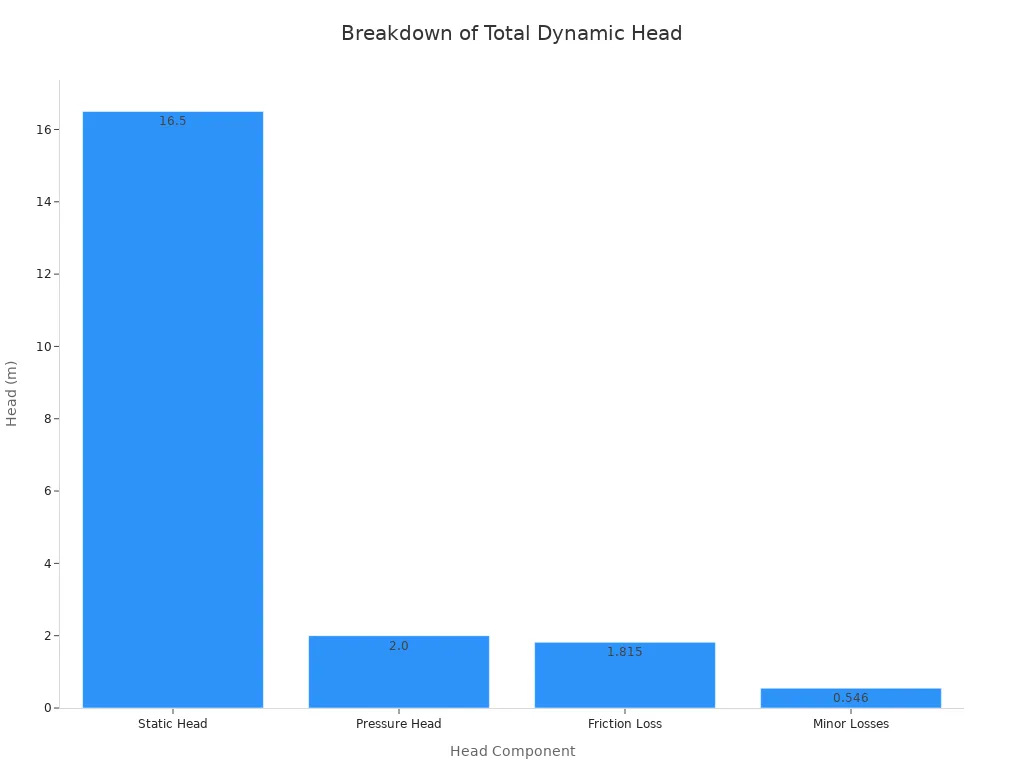
The table shows a key point. Static head takes up most of the total. It makes up nearly 80 percent of the TDH in this example. The high level water collection cooling tower goes right after this biggest part. You remove most of the vertical lift because the collection sump sits high above ground. The pump suction gets water at a raised spot, so the static head drops a lot.
The hydraulic power equation shows why this matters. Pump power equals fluid density times gravity times flow rate times TDH. Since TDH = Static Head + Friction Losses + Minor Losses, cutting static head directly cuts TDH. This drop lowers the hydraulic power need by the same amount. You get the same flow with less power input. The link is straight, so every meter of static head you take off turns directly into lower power use.
Think about a real comparison. A traditional tower needs a 10-meter lift from the ground basin to the distribution deck. Seagull's design cuts this lift to just 2 meters. The pump now works against only 20 percent of the original static head. This drop applies to every running cycle, every hour, every day. The power savings add up fast.
The impact grows with size. Large natural ventilation cooling towers gain a lot from this design. These setups move huge amounts of water all the time. The lower pump head turns into big electricity savings. In large-scale setups, the savings can reach up to 7.35 million kWh per year. That number means real money and real cooling energy costs avoided.
You also boost overall system performance. The pump runs closer to its best efficiency point because the system asks for less work. This gain extends equipment life and cuts maintenance needs. The pump wears less because it runs under lower stress. You save on replacement parts and service calls.
The energy savings story does not stop with the pump. Lower power use means less heat from the motor. The cooling system handles a smaller thermal load from its own parts. This creates a good loop that further boosts performance. Your evaporative cooling system runs cleaner and more efficiently.
The numbers make the case clear. Static head rules TDH. The high level water collection cooling tower removes most of that static head. You cut power use by the same amount. You reduce cooling tower energy use across the board. The design gives measurable savings from day one.
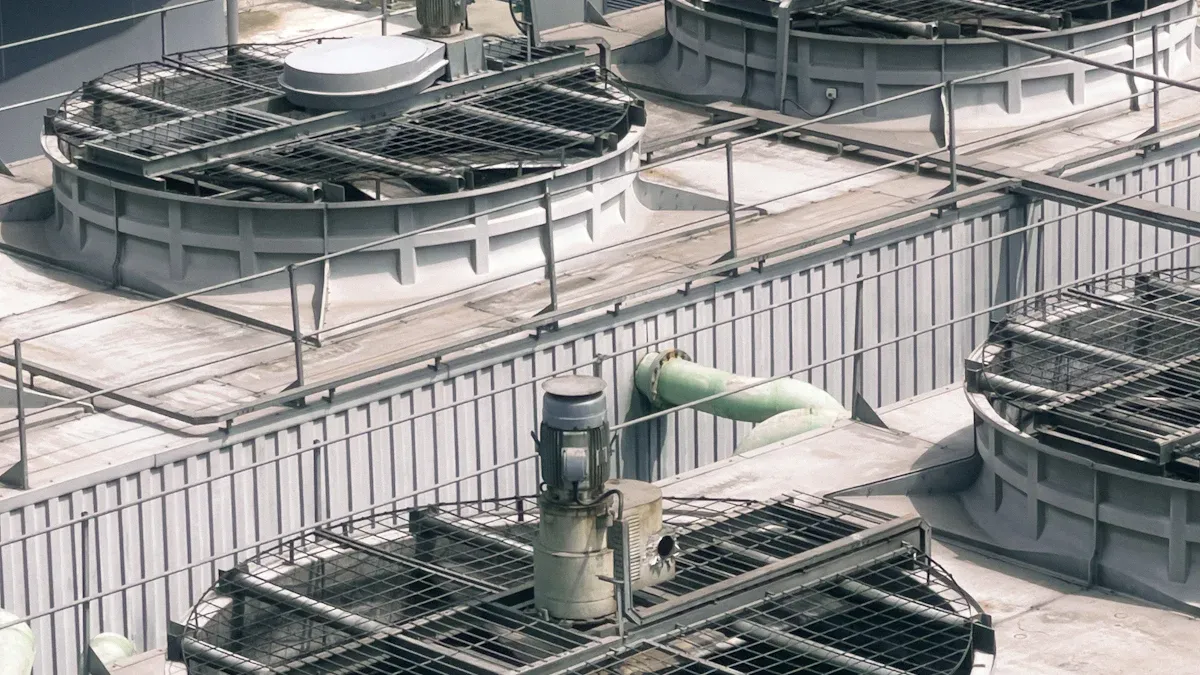
Data center cooling needs to run all the time without stopping. Each rack can use 50 to 200 kW of power. Old air cooling systems can only handle about 70 kW per rack. You need better options. Cooling costs can take up 40% of all operating expenses. Every watt you save on pump power helps your profits. If the system stops, it can cost up to $10,000 per minute for each rack. Your system must work 24 hours a day, 7 days a week, all year long.
The high level water collection cooling tower fits these needs well. It works great with natural ventilation systems. You get lower pump head and use less power. The design also cuts down on heat from the pump. Less heat means the system has less to cool. You get better overall performance.
Demand Metric | Requirement |
|---|---|
Rack density | 50–200 kW per rack |
Air cooling limit | ~70 kW per rack |
OpEx share | 40% of total |
Pump heat | 100–500 W per pump |
Downtime cost | Up to $10,000/min per rack |
Schedule | 24/7/365 |
PUE target | 1.02 |
This design also helps you hit power use effectiveness goals. You want a PUE of 1.02. Every part of the system must help. The pumps play a big role here. Lower pump power means a lower PUE. You move closer to the perfect target.
The upfront cost is higher. You spend more on equipment and building. The savings come from lower energy use over time. You usually get your money back in 1.5 to 3 years. This payback time depends on where you are. Areas with water shortages and freshwater costs over $8 per thousand gallons see payback in under 2 years. Discharge fees also change the numbers.
Old evaporative cooling can use millions of liters of water each day, but liquid cooling with smart circulation and heat exchange cuts water use a lot. This ability to save water is a key reason why high-efficiency pump systems are so important for running sustainably.
You save money in many ways. You use less power for pumping. You use less water because the design cuts down on splashing. Your water use effectiveness gets better. Less water means lower treatment costs. You also pay less in discharge fees. The total yearly savings can reach $200,850 for a system that blows down 60,000 gallons per day. The $400,000 capital cost pays back in about 2 years.
You also get free cooling benefits. The high level design supports free cooling cycles. You use outside air conditions without running the chiller. This cuts energy use even more. Your onsite cooling towers work better in every season. Lower pump power plus free cooling adds up to big long-term savings.
The high level water collection design also cuts noise levels significantly. The inclined water-collecting plates catch the spray water before it falls. This action lowers the drop height and the impact speed. Less impact means less noise from water spray. The rain zone height drops as well. The splash pad under the packing then works like a sound-absorbing mat. It catches leftover noise and softens the overall sound profile.
The silencing system adds another layer of protection. You install it inside the cooling tower, hidden below the collection parts. A grid-like truss structure holds modular silencing units. These units contain multi-stage silencing plates. The plates create sudden changes in cross-section and winding flow paths. These features reflect and dampen mid-to-high frequency sound waves. Those waves are the main noise sources from water spray impact. Guide angles and a central guide cone direct airflow along walls. This design lowers airflow resistance and regenerated noise. The system reaches a flow area of over 58 percent. You get good noise reduction without hurting thermal performance. This efficiency boost saves energy and lowers power use while making the tower fit for noise-sensitive areas.
You face higher upfront capital costs with this design. The elevated structure needs more equipment and civil work. Retrofitting existing systems brings challenges. You must check roof load when replacing cooling towers on rooftops. Yard space needs change. Electrical capacity may need upgrades. Control systems need integration with existing building management systems. Piping reuse needs review. Condenser water piping may become outdated.
The maintenance picture gets better over time. Reduced pump head means less stress on the pump. Lower stress leads to less wear and tear. You replace parts less often. You schedule fewer service visits. This drop in maintenance frequency cuts long-term costs. The pump runs closer to its best efficiency point. You save power with every cycle. You lower power draw across the system. The evaporative cooling process keeps supporting water reuse well. Water treatment needs stay manageable. You get better water efficiency across the system. The initial investment pays back through these operational savings.
The high level water collection cooling tower saves pump energy by cutting static head. This design makes smart sense for data center cooling. You gain significant energy savings, quieter operation, and lower maintenance costs. These benefits reduce your total cost of ownership.
Cost Component | Traditional Design | High-Level Collection | Savings |
|---|---|---|---|
Upfront Cost | 100% of initial investment | ~20% of life-cycle cost | Lower ownership burden |
Energy Consumption | Standard usage | Up to 45% less | Utility bill reduction |
Water Consumption | 20M gallons/year | 25-50% more cycles | Reduced water costs |
Maintenance | Crane required | Modular redundancy | Less downtime |
Evaluate life-cycle costs against traditional designs. Consider upfront capital and long-term operational savings. This technology supports energy and water conservation goals. It improves evaporative cooling effectiveness and enables free cooling cycles. You reduce power use while boosting efficiency. Such innovation cuts the carbon footprint of industrial cooling operations.
This design puts the collection sump above ground. Water moves straight into the pump suction. That makes the vertical lift much shorter. With less lift, the pump works less. You save power on every cycle.
Retrofitting is not simple. You need to check if the roof can hold the weight. Yard space needs may shift. Electrical systems may need updates. The raised structure needs extra construction work. Most facilities pick this design for new builds, not for retrofits.
Yes. Slanted plates catch spray water before it drops far. This lowers the fall height and impact speed. The shorter rain zone lets the splash pad soak up sound. You get quieter operation without losing cooling performance.
The pump faces less strain because it works against lower head. That cuts wear on moving parts. You need fewer service calls. The pump runs near its best efficiency point. Your water treatment needs stay easy to handle. Long-term maintenance costs drop a lot.
Payback usually takes 1.5 to 3 years. The exact time depends on local power rates and water costs. Places with pricey water see faster returns. Your yearly savings can hit $200,850 in big systems. The $400,000 capital cost pays back in about two years.