


International Layout

+
Seagull Cooling Technologies (Asia Pacific) Sdn. Bhd.


Design requirements for a cooling tower help keep cooling safe, efficient, and reliable. You must pick the right design for your site and how you use it. Good cooling tower design helps heat move better and saves energy. You can use less water and spend less money for your business.
You save energy when you pick a cooling system that fits your needs.
You pay less for fixing and taking care of the system when you use the best design steps.
Pick the cooling tower type that fits your space and needs. You can choose crossflow, counterflow, or closed circuit models.
Make sure your cooling tower is the right size. If it is too big or small, it wastes energy and costs more money.
Use materials that do not rust easily to make your cooling tower last longer. Galvanized steel, stainless steel, and concrete work well.
Always follow local safety rules and standards. This helps your cooling tower run safely and well.
Keep up with regular maintenance and make sure you can reach all parts. This stops breakdowns and lowers repair costs.
Seagull has many cooling tower choices. You can pick crossflow, counterflow, or closed circuit models. These choices help you find what fits your needs. Each type has its own features and needs.
You need to know how open and closed circuit cooling towers are different. The table below shows how these two types compare in important ways:
Feature | Open Circuit Cooling Towers | Closed Circuit Cooling Towers |
|---|---|---|
Power Saving Operation | Needs more power because air touches the water. | Needs less power; water does not touch air. |
Volume of Water Treatment | Uses more water for cleaning. | Uses less water because circuits are separate. |
Corrosion Issues | Can rust because water meets air. | Water stays safe from rust and dirt. |
Maintenance Requirements | Needs more care because it is more complex. | Needs less care because it is simpler. |
Water Requirement | Loses water like closed loop towers. | Saves water because of special design. |
Capital Investment | Costs less to buy at first. | Costs more at first because of heat exchanger. |
Operational Cost | Costs more to run because it is less efficient. | Costs less to run with less pumping power. |
Expansion Flexibility | Easier to make bigger. | Needs special design to make bigger. |
You should check these things when you choose your cooling tower.
Cooling towers use crossflow or counterflow airflow. Each works best in certain places.
Counterflow towers cool better. They give stronger cooling.
Crossflow towers need more fan power. This uses more energy when working hard.
Crossflow towers are smaller. You can use them where ceilings are low.
Counterflow towers are taller and use less floor space. You can fit them where space is tight.
Pick the cooling tower type that fits your space and cooling needs.
Think about your industry and site before you pick a cooling tower. The table below shows important things for different uses:
Factor | Description |
|---|---|
Cooling Capacity and Efficiency | Make sure the tower can handle big loads without wasting energy. |
Space and Facility Layout | Some towers need more room. Others fit in small spaces. |
Water Usage and Regulations | Hybrid towers help you follow strict water rules. |
Maintenance and Lifecycle Costs | Plan for easy cleaning and long-lasting care. |
Tip: Seagull’s experts can help you pick the right cooling tower for your industry, like power, mining, or manufacturing.
You will get the best results if you think about all these things when you choose your cooling tower.
You need to pick a good spot for your cooling tower. Where you put it changes how well it works. Cold places let you use outside air to cool water better. Shade helps cooling towers work because sunlight slows heat transfer. Cooling towers should go on the north or east sides of buildings. Wind matters too. Keep cooling towers at least 25 feet from air intakes. This stops warm air from getting inside and keeps cooling strong.
Cold places make cooling easier.
Shade helps towers cool better.
Wind and air intake spots help cooling work best.
Sizing is very important for cooling tower design. You must figure out how much heat your system needs to get rid of. Use math to find the right size. Airflow matters, not just water flow. Water quality changes how well the tower works over time. You need to know cooling range, approach, and wet bulb temperature. These things help you pick the best cooling tower.
Parameter | Description |
|---|---|
Heat Load (Q) | Water flow rate × specific heat × temperature difference |
Cooling Range | Difference between hot water inlet and cold water outlet temperatures |
Approach | Difference between cold water outlet temperature and ambient wet-bulb temperature |
Cooling Tower Effectiveness | Ratio of actual range to ideal range, shown as a percentage |
Air Flow Rate (V) | Volume of air moved through the tower to absorb heat from water |
Water Flow Rate (GPM) | Volume of water circulated through the tower per minute |
Your cooling tower must be the right size for your needs. If you pick the wrong size, you waste energy and water.
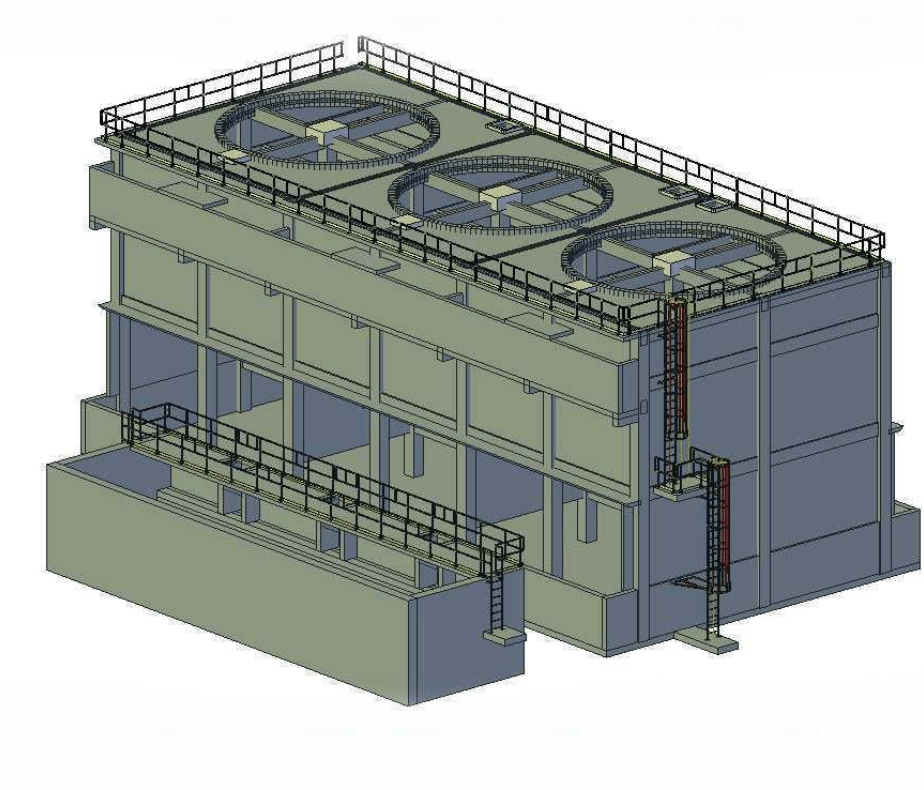
Strong parts are needed for cooling tower design. You need a sturdy frame to hold everything. The fan system makes air move for cooling. The fan stack keeps air moving evenly and stops warm air from coming back. The fan deck holds fan cylinders and heavy loads. Valves control water flow and keep water levels steady. The cold water basin collects cooled water and helps with chemical treatment. The distribution basin spreads hot water for better cooling.
Component | Function |
|---|---|
Cooling Tower Fan System | Makes airflow for cooling performance. Includes motor, fan, driveshaft, and gearbox. |
Fan Stack | Keeps airflow uniform and stops warm exhaust from recirculating. |
Fan Deck | Supports fan cylinders and mechanical loads. |
Valves | Control water flow and levels. |
Cold Water Collection Basin | Collects cooled water and supports chemical treatment. |
Distribution Basin | Spreads hot water for efficient cooling. |
Structural Frame | Supports all components and channels loads into the foundation. |
Fans, motors, and pumps help cooling work well and stay reliable. You must take care of these parts to keep your system running.
Materials are important for cooling tower design. You must pick materials that fight corrosion. Galvanized steel, fiberglass, stainless steel, and concrete are common choices. Concrete basins last longer and fight corrosion better. Stainless steel is strong. Galvanized steel costs less but does not fight corrosion as well. Hybrid cooling towers use both stainless steel and galvanized metal for more strength. Fiber Reinforced Polyester (FRP) protects against corrosion but can cost more.
Galvanized steel saves money.
Stainless steel is strong.
Concrete basins fight corrosion.
FRP panels give extra protection.
The frame is usually made from galvanized steel or stainless steel. Fiberglass reinforced polyester panels add more protection from corrosion. Good materials help your cooling tower last longer and need less fixing.
Safety is a big part of cooling tower design. You must follow local rules and standards. NFPA 214 covers fire safety for cooling towers. You need space around the cooling tower for safe access. You must follow water saving rules and air quality standards. In places with strict rules, you may need hybrid or closed-circuit cooling towers. Eco-friendly designs use safe materials and processes.
Design Aspect | Strict Regulations | Less Stringent Regulations |
|---|---|---|
Water Conservation | Use hybrid or closed-circuit towers | Traditional wet cooling towers allowed |
Air Quality Standards | Follow local air quality standards | Fewer restrictions on emissions |
Eco-Friendly Design | Use safe materials and processes | Standard materials may be used |
You must check all safety rules before you set up your cooling tower. This keeps your cooling system safe and working well.
Seagull uses smart parts and new designs to meet cooling tower design needs. Automated controls, variable frequency drives, and hybrid cooling help save water and energy. High-efficiency cooling towers lower costs and help the environment. You can save up to 40% on energy by using energy-efficient cooling systems. Seagull’s cooling towers help you reach green goals and follow rules.
If you do not size your cooling tower right, you can make big mistakes. A tower that is too small cannot get rid of enough heat. This makes things hot and puts stress on your equipment. Your energy bills will go up. Your system may break more often. If your tower is too big, you spend extra money on parts. You can have trouble with water flow and control. Oversized towers do not work as well and use more power than needed.
Some sizing mistakes are:
Using old or wrong load numbers
Not checking local wet bulb temperatures
Forgetting about weather changes
Not planning for backup needs
Only thinking about today, not future growth
Sizing Error Type | Consequences |
|---|---|
Undersized Cooling Tower | High temperatures, equipment strain, more energy use, less reliability |
Oversized Cooling Tower | Poor fan operation, bad water distribution, higher costs, control problems |
You must watch water quality in your cooling tower design. If you ignore water issues, you can get scaling, corrosion, and biofouling. These problems make cooling less effective. You will need to clean or fix parts more often. Bad water quality can raise your yearly costs by 20-30%. You will need more repairs and cleaning.
Water Quality Issue | Causes | Solutions |
|---|---|---|
Scaling | Hard water, high heat, minerals | Chemical treatment, regular cleaning, monitoring |
Corrosion | Low pH, chemical reactions, bacteria | Use strong materials, pH control, routine checks |
Biofouling | Warm water, sunlight, nutrients | Biocides, better filters, regular cleaning |
Workers must be able to reach all parts of your cooling tower. If you do not plan for easy access, you will have more breakdowns. Repair costs will be higher. Good access lets you do preventive maintenance. This keeps cooling running well and safe. Bad access can cause safety risks. Harmful bacteria like Legionella can grow. This can cause health problems and legal trouble.
Tip: Always add ladders, walkways, and clear spaces in your design. This helps workers do safe and easy maintenance.
You must follow all rules for cooling towers. If you do not, your tower can leak harmful materials. It can become a source of pollution. This can lead to fines and more checks from local agencies. After outbreaks of diseases like Legionnaires’, rules are stricter. You need to test and report water quality. You must follow safety laws. Not following rules can make you responsible for health risks and legal issues.
Stay updated on all local and federal regulations. This keeps your cooling tower safe and legal.
You should pay attention to the most important cooling tower design steps. Planning ahead, making smart choices, and getting help from experts will make your cooling system work better. If you plan your HVAC system well, you will get better results. You should check your system often and talk to experts before you change anything. Good project management helps your cooling system run without problems.
Service Type | Description |
|---|---|
Program Audits | Check chemistry, equipment, and how things work at your site. |
Failure Analysis | Find out what caused problems and stop them from happening again. |
Full Engineering Reports | Get easy-to-understand advice for design and making things better. |
Seagull has new and creative cooling solutions. If your project is hard, you should ask a professional for help to get the best results.
You use a cooling tower to remove heat from water. This helps your cooling process work better. The tower lets hot water meet air, which cools it down before you reuse it in your system.
You should clean your cooling tower at least twice a year. Regular cleaning keeps your cooling strong and stops bacteria from growing. Always follow the manufacturer's advice for best results.
You must wear safety gear like gloves and goggles. Always check for wet floors. Make sure you follow all posted rules. Good safety steps protect you and keep your system running well.
You can use a cooling tower for many buildings, like factories or offices. You must check your building’s needs first. Some places need special designs for the best cooling.
You should check water temperature and airflow. Listen for strange noises. Watch for leaks or rust. If you see problems, fix them fast to keep your cooling system safe.